


When I went abroad to Germany, I was pretty nervous. I would be living with a family I had never met before. I didn’t know anything about German culture. I was determined to make my trip a success, but still had some reservations.

Being an exchange student is not a competition, but some kids definitely do better than others. Every trip is different. Some students aren’t ready to go abroad. Some familes aren’t ready to host. The organization I went through, Youth for Understanding (YFU) tried to teach us how to make our travels successful. We went through a pre-departure orientation, an arrival orientation, and even an orientation at the end of our trip— let me just say I’ve had enough icebreakers to last a lifetime.
They offered some advice, which I offer to you now. Not all exchange students have the luxury of being over-orientated like I was, so they have nothing to dispel their worries.
So, I present…

…a list of 6 quick, messy tips!
Food is important! When you’re abroad, your host parents may cook for you, or buy food for you, or take you out to eat. If you don’t like a food, fine– but try it at least once. Your family wants to share their culture with you, and food is a huge part of that culture.
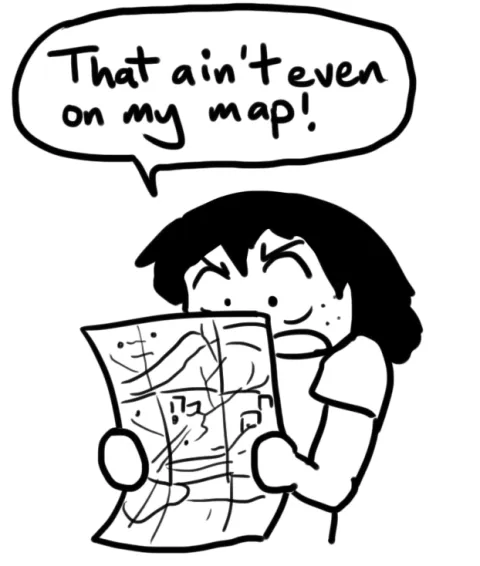
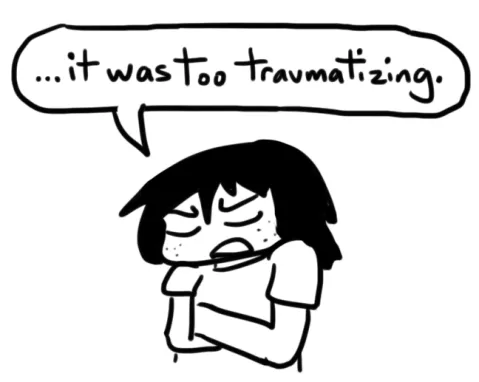
I met an Indian-American girl who became an extreme example of this when I went to Germany:

Not that I’m saying that anyone should give up vegetarianism, especially if it’s important to you. However, be ready to try new things! Go to your country with an open mind. Remember, you’re the odd man out here. You’re going to have to adapt to your new country, just as they have to adapt to you.
After I announced I was going to Germany, everyone had expectations for me.

Although I applied to go to Japan, I was sent to Germany instead. Though I was a little disappointed at the time, in retrospect it was a good thing. I’m obsessed with manga (surprise!) and I therefore had a very unrealistic view of what my Japan trip would be like.

This might sound pessimistic, but if you go in with overly high expectations, you may be disappointed. Not all students have the best experience. Before I went to Japan, my Japanese tutor who went on the same trip frequently told me,
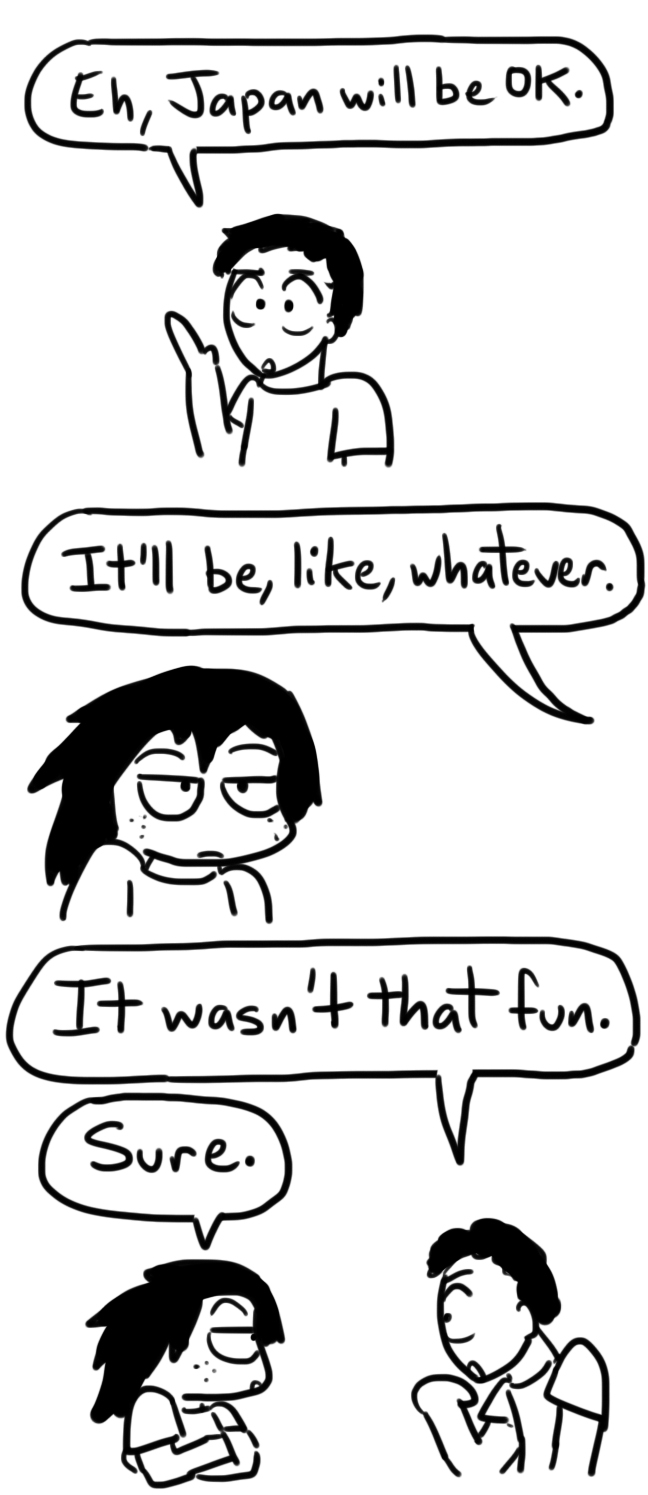
And this isn’t a bad attitude, either. When you have no expectations– none at all– you can go in and appreciate every experience for what it is, instead of thinking about how much better it could be. I went to some amazing places in Germany, but I also spent a lot of time just hanging around my host family. Both ends of the spectrum, to me, were equally valuable.
Exchange students tend to stick together, which makes sense. In a strange, new land, there’s a group of people who speak your language, know your background, and understand the way you think. Who are you going to gravitate towards?

Running around and looking at famous sites is fun and all, but it doesn’t immerse you in the culture. The best way to learn about your host country is to talk to people who know it the best– the people who have lived there their entire life. At the very least, try not to be a “guest” to your host family. Help around the house, hang out, and talk to them!
Talking to natives can be a bit difficult, though, which brings me to the next two points:
My German host family speaks English, so I was able to speak with them fairly well. I tried hard to learn a bit of German, though. I even purchased a phrasebook before departure. One of the phrases I still remember:

I did became frustrated when I met people beyond my host family. Not many of my host family’s friends or relatives spoke much English.

I did a little better when I went to Japan, since I had a slight knowledge of the language. Still, that didn’t stop me from speaking terrible Nihonglish. Some of the stuff that came out of my mouth was preeeettttyyy dumb.
Like during my homestay in Japan. I spent my homestay with another American girl, who’ll I’ll call “K” for anonymity.

So go! You don’t have to sound as dumb as me, but don’t be afraid to speak the language. Even if you get it wrong, people will appreciate the effort. It’s better to communicate a little rather than not at all!
But as you’re off adventuring, and learning new things, and seeing new places, a feeling– one of the most unexpected, gut-wrenching feelings– one that can and has sent kids home and ruined exchanges– is going to hit you.
I’ve never been abroad for a extended period of time, so I don’t have much experience with this. But I can attest to the stress that comes with going abroad. The climate is different. The food is different. The language is different, forcing you to concentrate all day, every day. A lot of students experience exhaustion their first few days abroad.
When it really gets bad, I hear, is about three or four months into your exchange. By then, the “honeymoon” period of your exchange has worn off. The novelty is gone. Yet three months is a very short time within which to make friends (at least for me, but I am friend-making-ly challenged) so many students find themselves suddenly craving the familiarity of home.
My best friend from high school hosted a girl from France for a year. Sure enough, a couple months into her exchange, my best friend confessed:
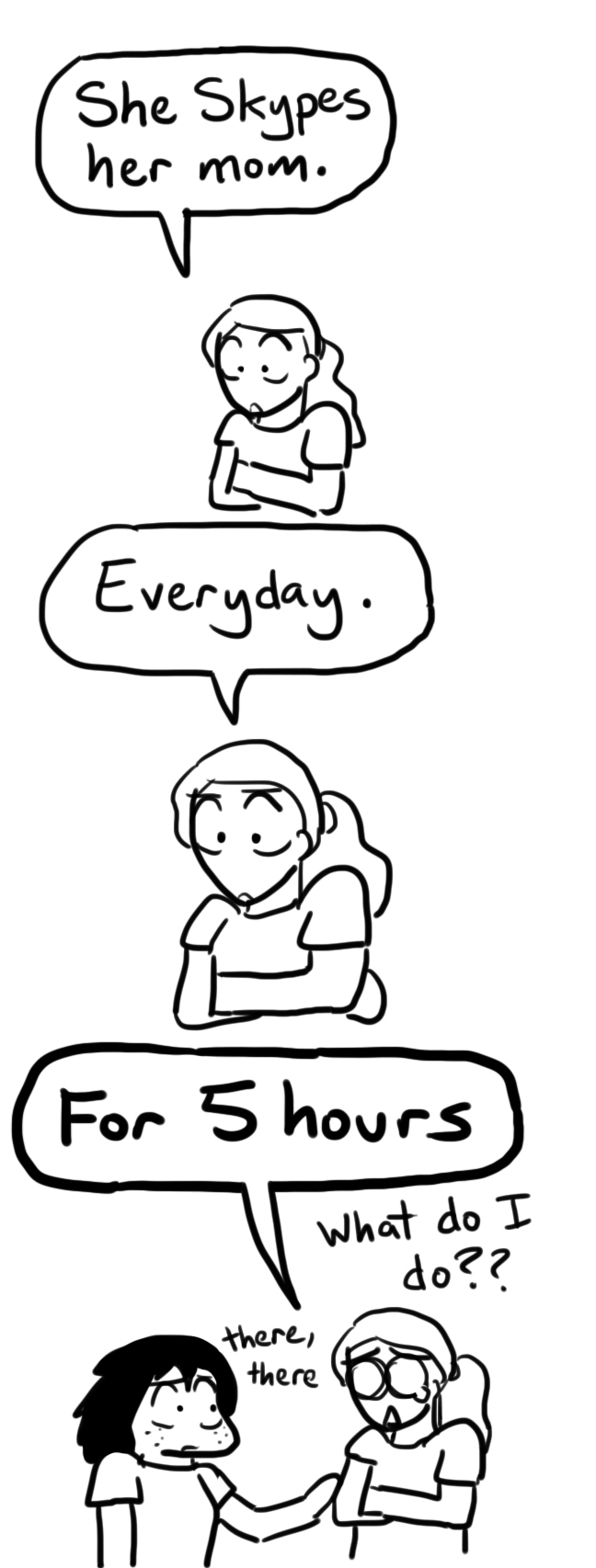
While you’re wrapped up calling home, though, you’re missing out on what’s going on around you. Time spent talking with your real family is time missed talking with your host family. YFU told us, many, many, times:
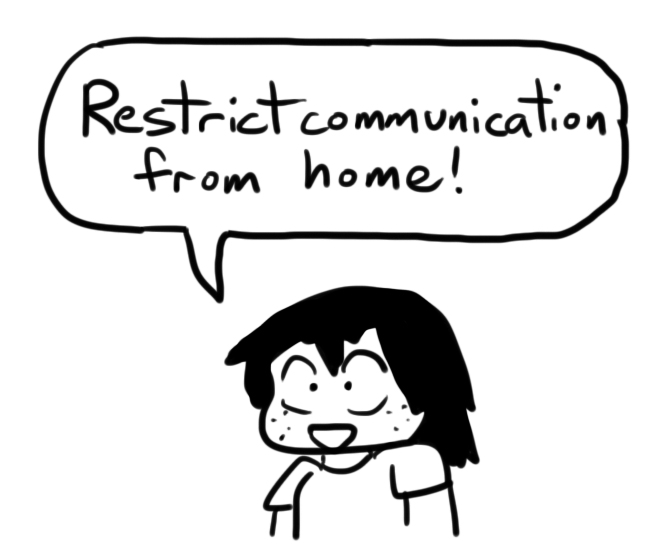
Because, more often than not, kids encounter this problem on their exchange. (They even told kids on short-term exchanges to leave their laptops behind, to avoid hiding behind a computer screen all day.)
When I went to Germany, I actually wasn’t expecting to get homesick. I was only there for six weeks. But sure, enough, when I Skyped my parents…

And then my friends…

Of course, I never got to the OMG-I’m-miserable-here-send-me-home-right-now point, but I did feel those pangs of homesickness. After you hit that low, though, your exchange slowly gets better and better until, by the end, you don’t want to go home anymore! And then you go home and get reverse culture shock, which is a whole other story.
I guess, in the end, all of these tips really boil down to one thing:

You can’t truly enjoy the country if you aren’t in the country. Not just physically there, but mentally there as well. Immerse yourself!
So, to all you prospective exchange students? Don’t be scared: go abroad! No two exchanges are alike– and some kids do have bad luck– but most kids have a blast abroad. (I did!) In the end, your experience is what you make of it. And the things you can learn from your experience… well, that’s a whole other post in itself.
Now go board a plane and spread your awesomeness elsewhere.
High schoolers! Don’t know where to start? I super-believe in studying abroad, so I’mma link to two organizations I know are legit:
Youth for Understanding (I used this one! If money’s an issue, there’s a ton of scholarships available, like the full-ride I got to Deutschland!)
AFS Intercultural Programs (A girl I knew used this one to go to Japan– they offer partial scholarships.)

I draw crappy comics all the time, but can I actually write?
Well, I’m going to take this game I was tagged in by the lovely kindredspirit23 and let you be the judge. Being blog-tagged sure is fun! (not sarcasm)
Anyway, here’s the rules:

1) Go to page 7 or 77 of your current WIP.
2) Count down 7 lines.
3) Quote the next 7 lines (finish the thought, if you need to)
4) Choose 7 more authors to play
As I mentioned earlier, I’m not exactly a writer. I have no awesome novels-in-progress at the moment. Kindredspirit23 suggested that I use a school paper, since I have definitely written papers over 7 pages before.
And so I have. But none of them are saved on my current computer.
Well, unless I double-space the paper I wrote for my Advanced Writing class on the misregulation of lncRNA in cancer cells. It’s single-spaced, 5 pages right now– but if I double space it, we’ll be smack-dab in the Works Cited section!
My 7 lines: (or, more accurately, 7 and a half on the original Word document, since I had to finish that last citation there. Knowing the page numbers are important!)

Okay, okay. That’s a dick move.
I’m going to do this properly. I’m going to triple-space my essay to get us 7 lines of actual content: (or, in this case, 6.5 lines on the original Word document)

Yeah.
There’s a reason I draw instead of write.
(Thanks again to kindredspirit23 for tagging me! This was very entertaining to write!)
Time for more Japan!
While my group was in Sapporo, we took a break from city life to go to… well, another city.
This city, known as 登別市 (Noboribetsu-shi, or Noboribetsu City) isn’t very big– the estimated population is around 50,000 or so. It is famous, though, in Hokkaido. First, it’s part of 支笏洞爺国立公園 (Shikotsu Touya Kokuritsu Kouen, aka Shikotsu-Tōya National Park) which is famous for its beautiful mountains and volcanic calderas. Second, volcanic activity means volcanic hot springs– and, accordingly, 温泉: onsen.
The term onsen, as I understand it, literally translates to hot springs. It can also refer to the resorts and hotels built around those onsen. Japan is a volcanically active country, so there are lots of spots for people to build these resorts– and they might as well, since onsen are popular in Japan.
And we were going to find out why.
Our amazing and awesome sensei scheduled us to stay at Noboribetsu for a night! In an onsen, of course. We were all pretty psyched– at this point, we had been taking classes, meeting with conversation partners, and running around Sapporo nonstop! Even in Japan, we were ready for a break.
However, before I go on, I should say this about onsen:
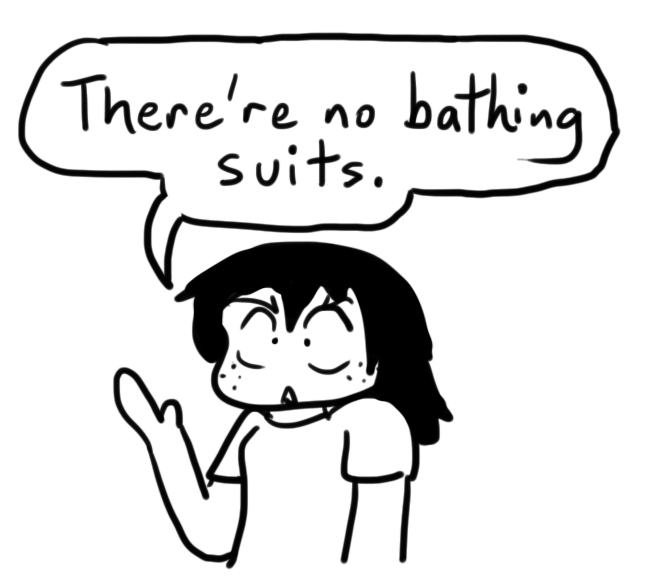
Oh. Okay. What are there, then?
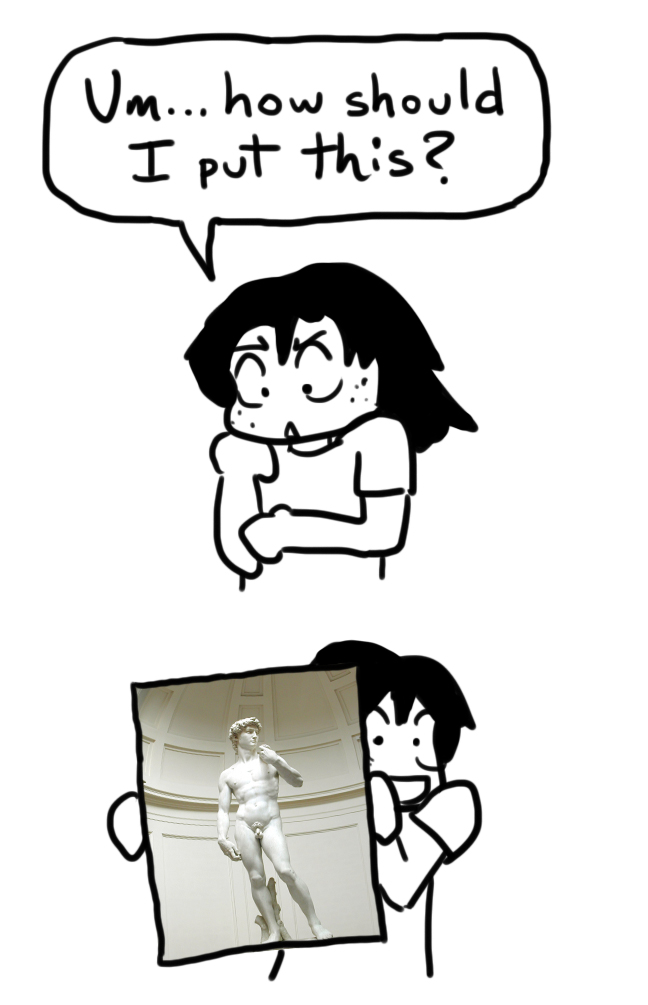
Yup. The Japanese usually go to their hot springs totally in the nude, not unlike Germans and their saunas. We were all aware of this. How did this make us feel?
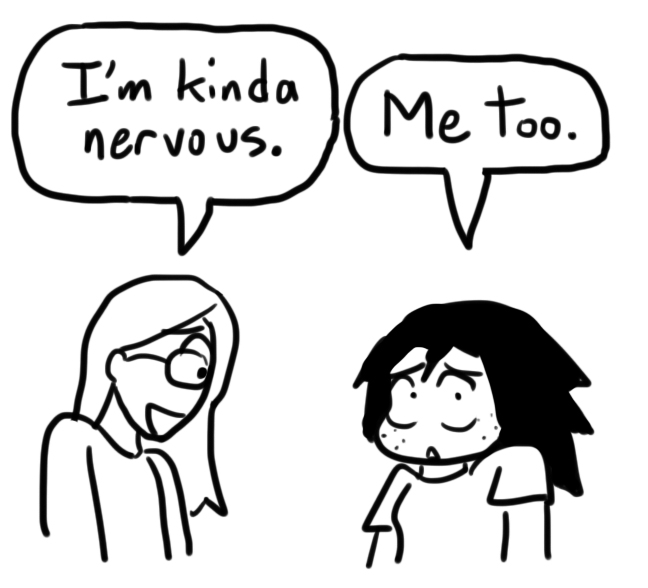
America is, for some reason, a nude–fearing country, so none of us were used to, well, being naked in front of others. In addition, the Japanese are polite. Accordingly, we had a lot of bath house etiquette to learn before our excursion.

This, more or less, is the lesson we received from our sensei. Despite our nervousness, we were still excited! I mean, every single manga has at least one hot springs scene, right? And, out of 18 kids, I’m pretty sure only two or three kids weren’t into manga/anime… so… that was that.
I’m getting ahead of myself, though. Before we got into any sort of onsen, we decided to tour the natural wonders of Noboribetsu’s volcanic landscape. More specifically, we took a hike around Jigoku-Dani, also known as
The valley is home to a number of volcanic lakes and streams, leading to stunning scenery like this:
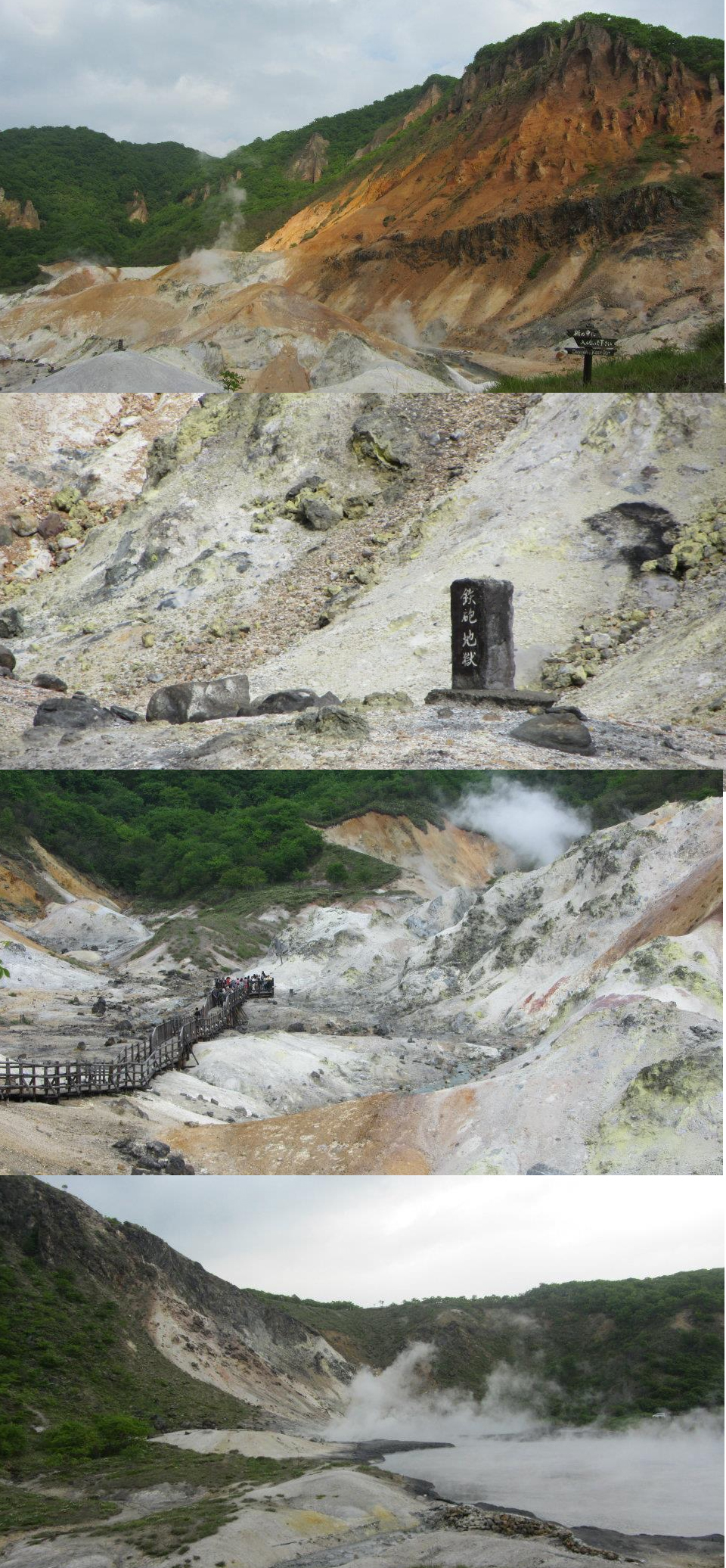
And that steam is no joke! The water was scalding– too hot to the touch.
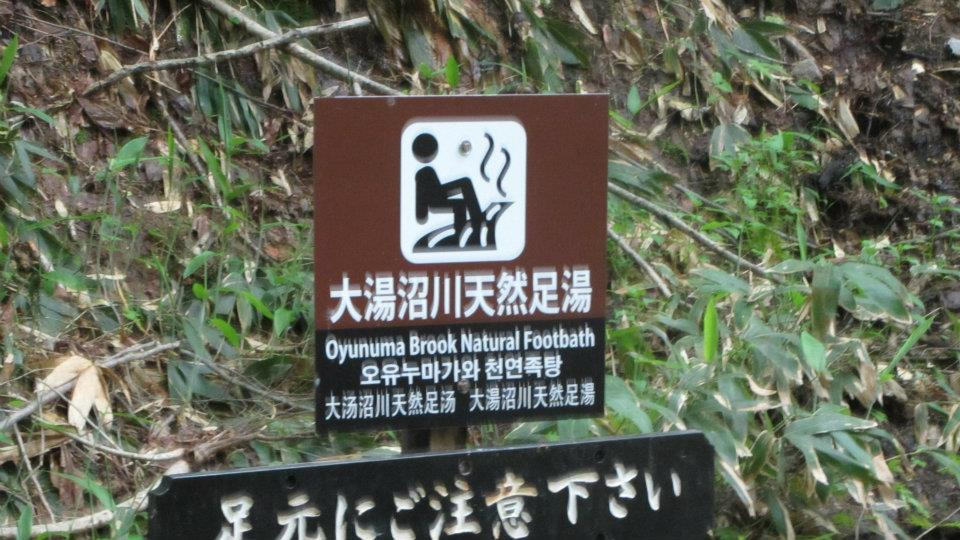
Though we didn’t get to bathe in the lakes, we did get to enjoy some of the naturally-heated water. Our group took a hike through the forest, where we encountered this:
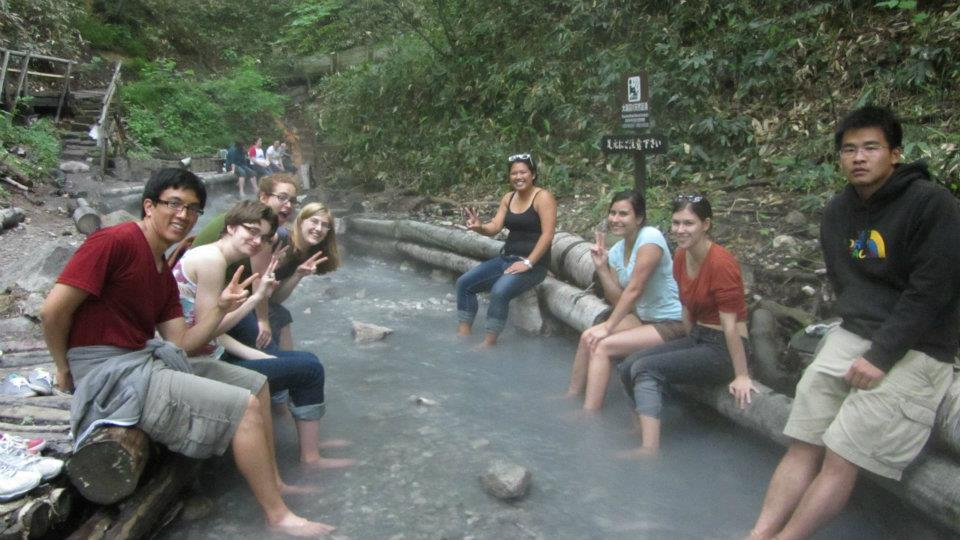
And, naturally, we took the chance to enjoy it!
I could go on and on about our hotel, too. The traditional rooms with its sliding doors, low tables, and tatami mats. The luscious, Japanese-style futons. The open buffet with all-you-can-eat crab and miso soup and much, much more. Most importantly, there was an arcade in the basement with a giant Pikachu.
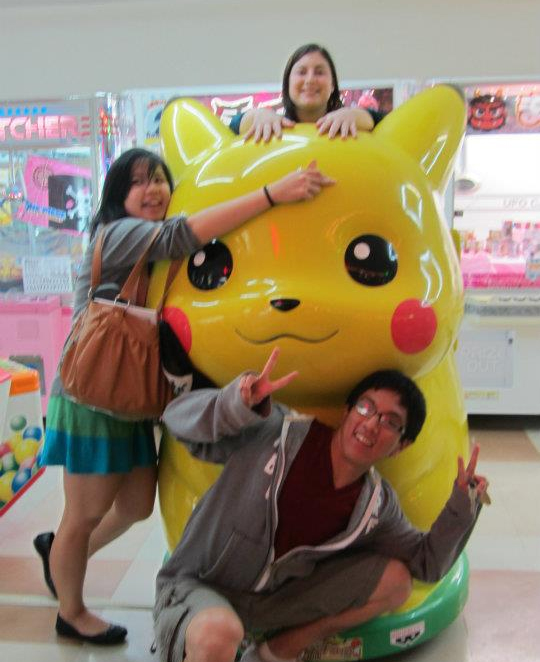
But instead, I’m going to skip to the best part: the onsen.
The onsen.
Was amazing.
We went in there at night, which was no problem– the baths open early and close late. There were two separate baths, one for women, and one for men. There’s an indoor section, with a number of different pools set at varying temperatures. We ventured there first.

After puttering around there for a while, we noticed people were walking in from the outside. Meaning there was an outside. We decided to venture outside.
And it was…
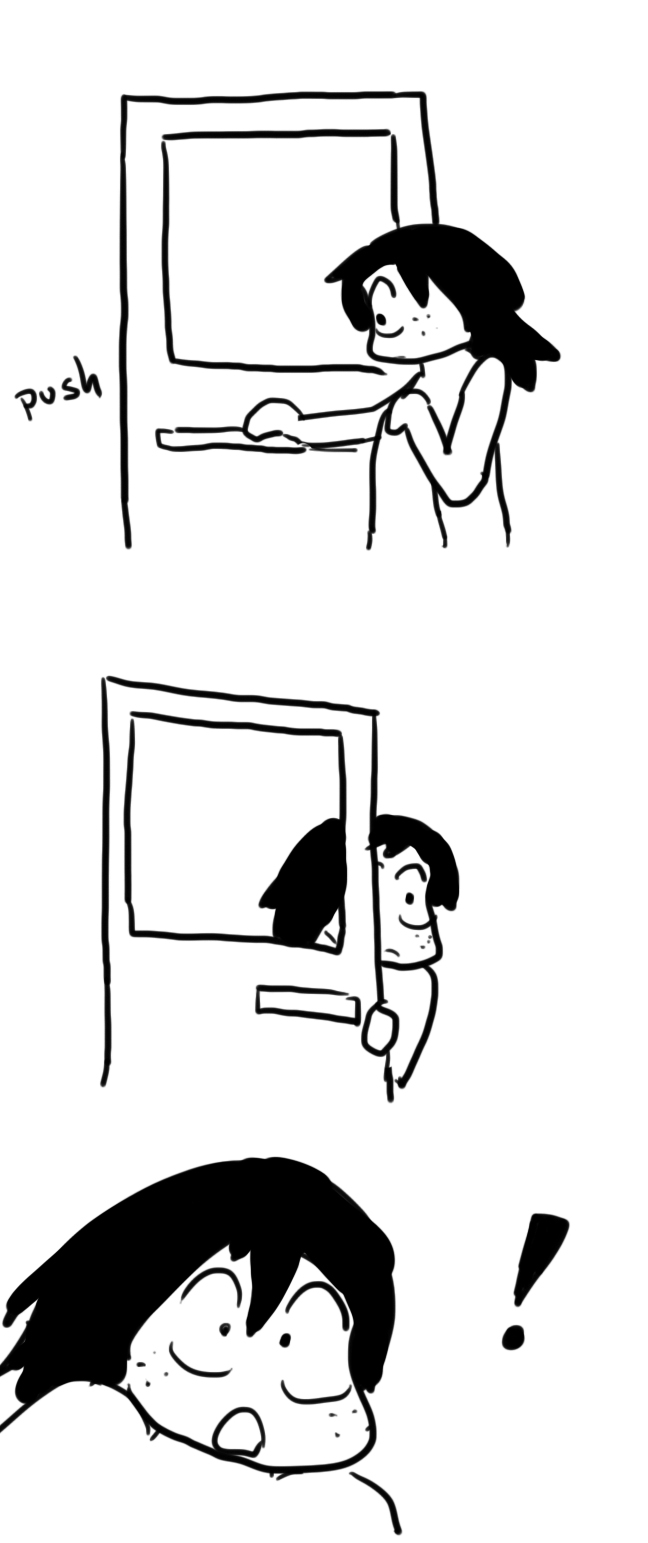
Beautiful.

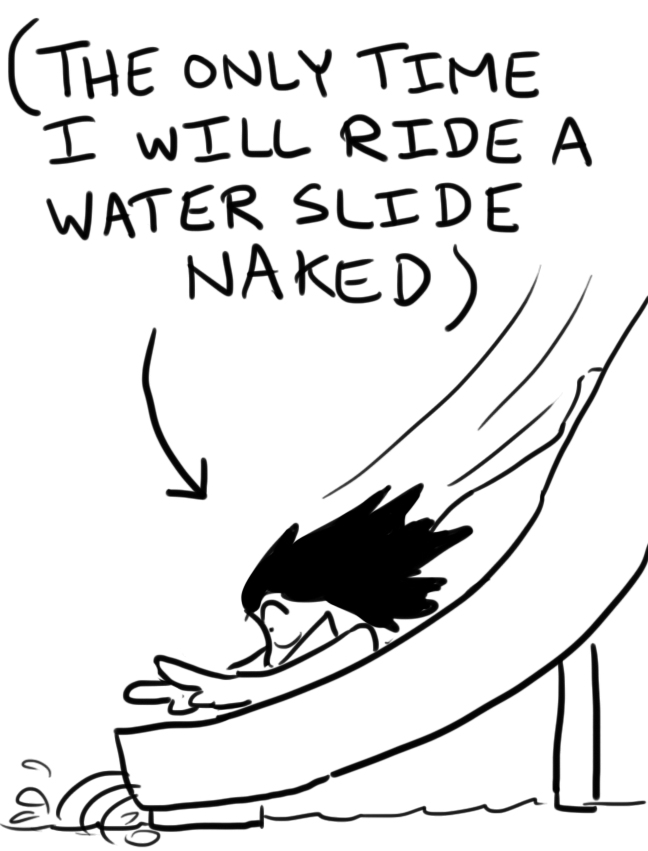
Photography typically isn’t allowed in onsen, for obvious reasons. I’ll try to make do with description: the onsen was softly lit, surrounded by graceful trees and rocks. It was drizzling gently outside, a nice cool contrast to the steaming water. There were well-placed boulders sticking out of the pools, serving both as organic ornament and a place to lounge. And, before I forget: there was a water slide.
You know, words can’t do it justice. Instead, I’m going to put up some photos I found of our hotel. (Err, at least, I think we stayed here. The name of the onsen eludes me.)
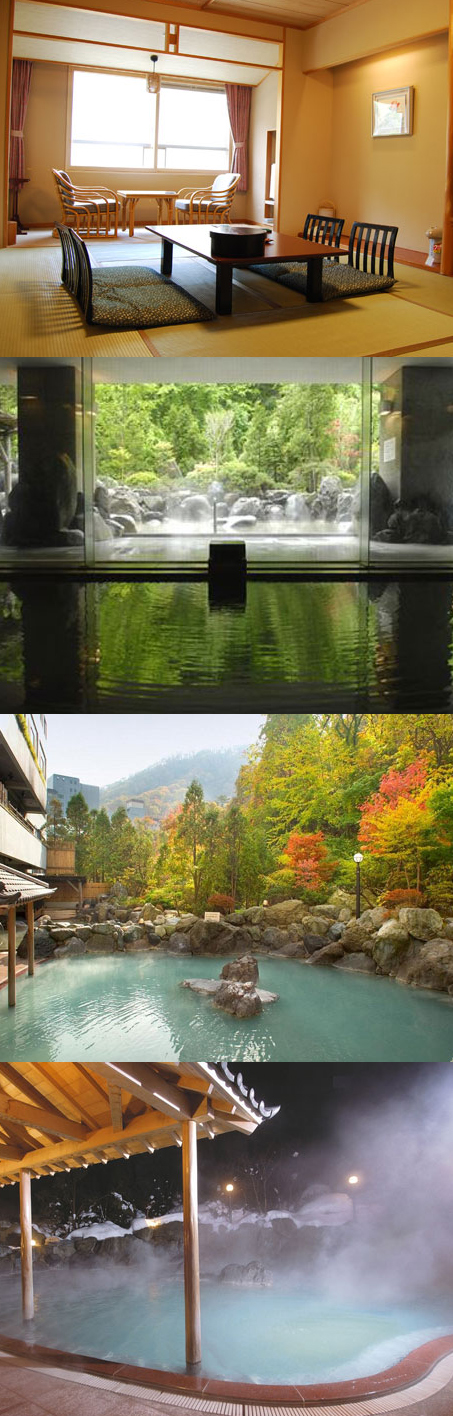
Three hours later, we were still there. And then, after staying up late, some of us woke up early to go again before we had to leave the hotel. Because it was just so… relaxing! Or, as the Japanese would say, 気持ちいい! (Kimochii— feels good!)

I mean…

It’s like any new experience– it may be uncomfortable at first, but you can have a great time if you just put yourself out there!
Literally this time.
So that night, I cozied up in my (hotel-provided) yukata…
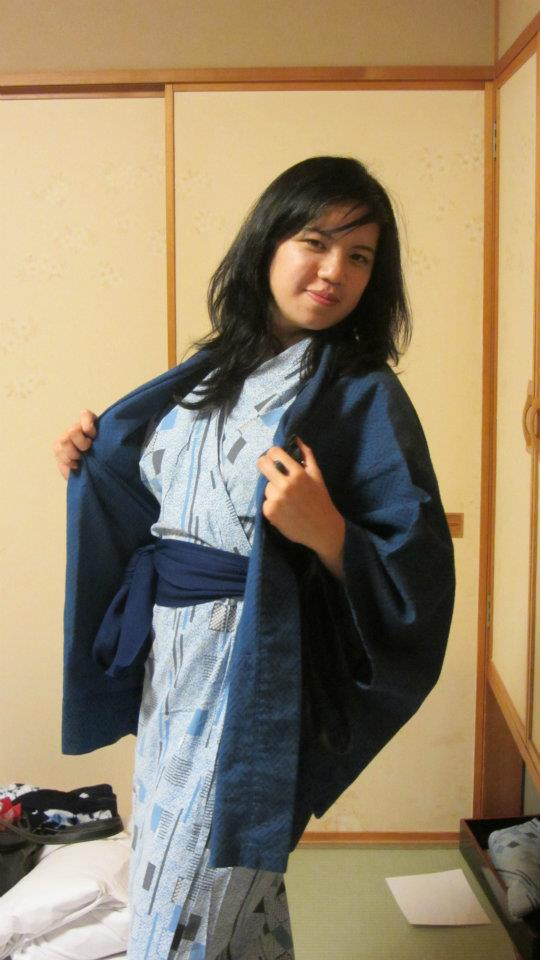
…and fell into one of the deepest, most satisfying sleeps I’ve ever had.

I’d do it again anyday.
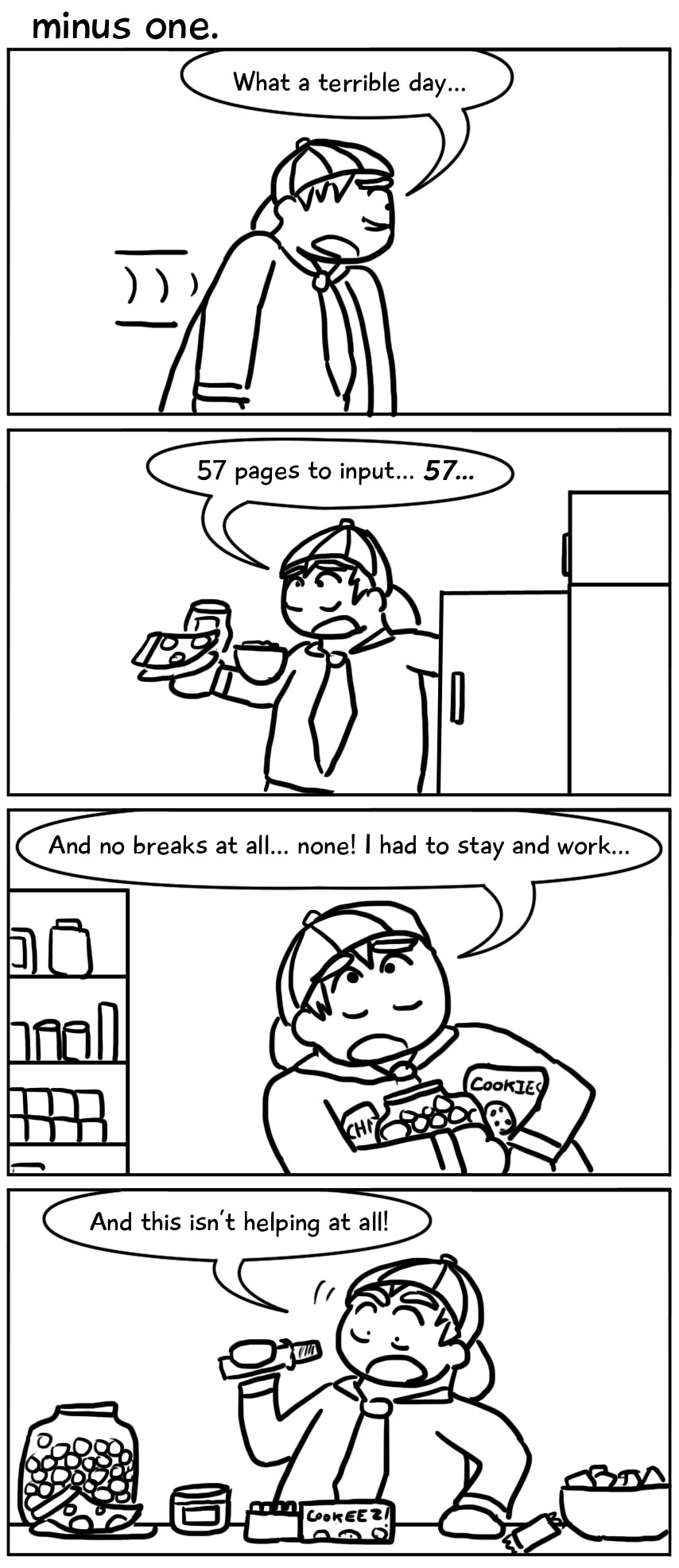
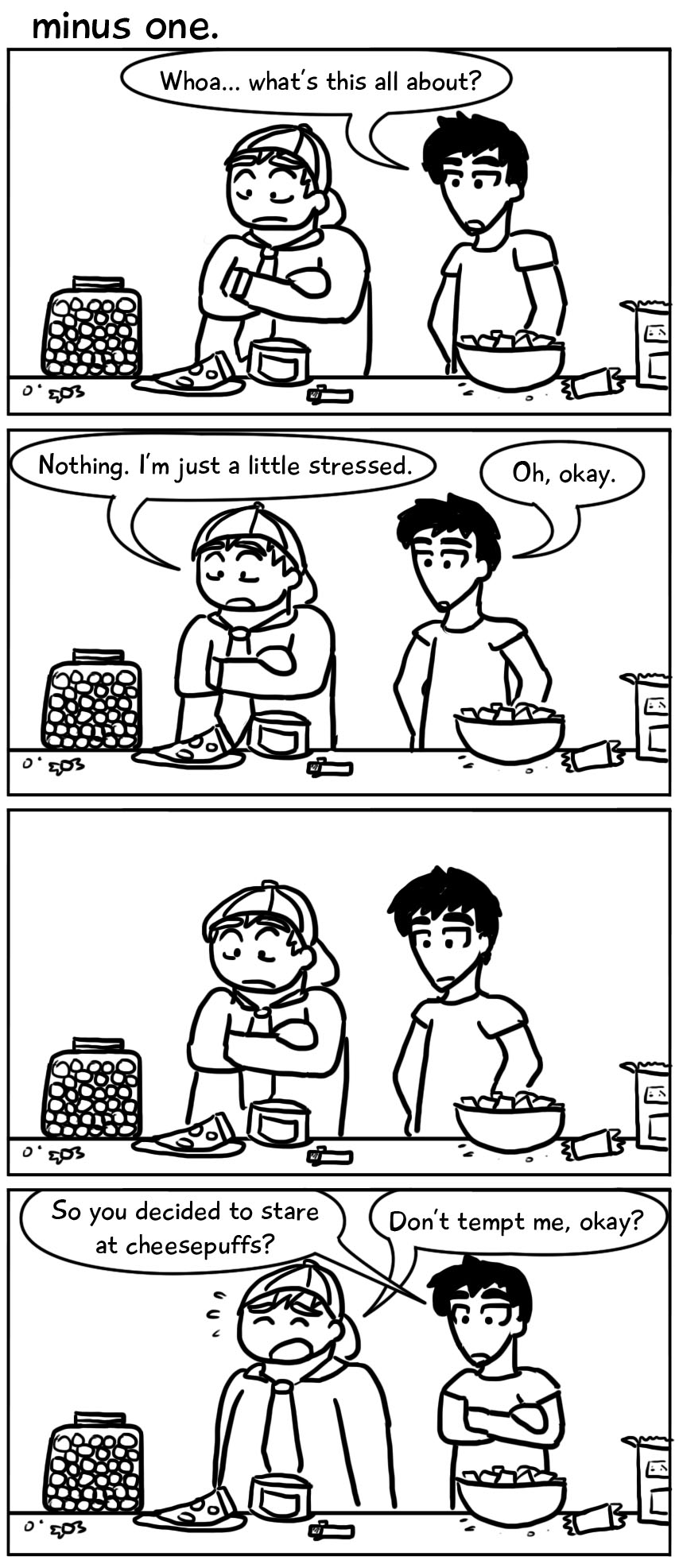
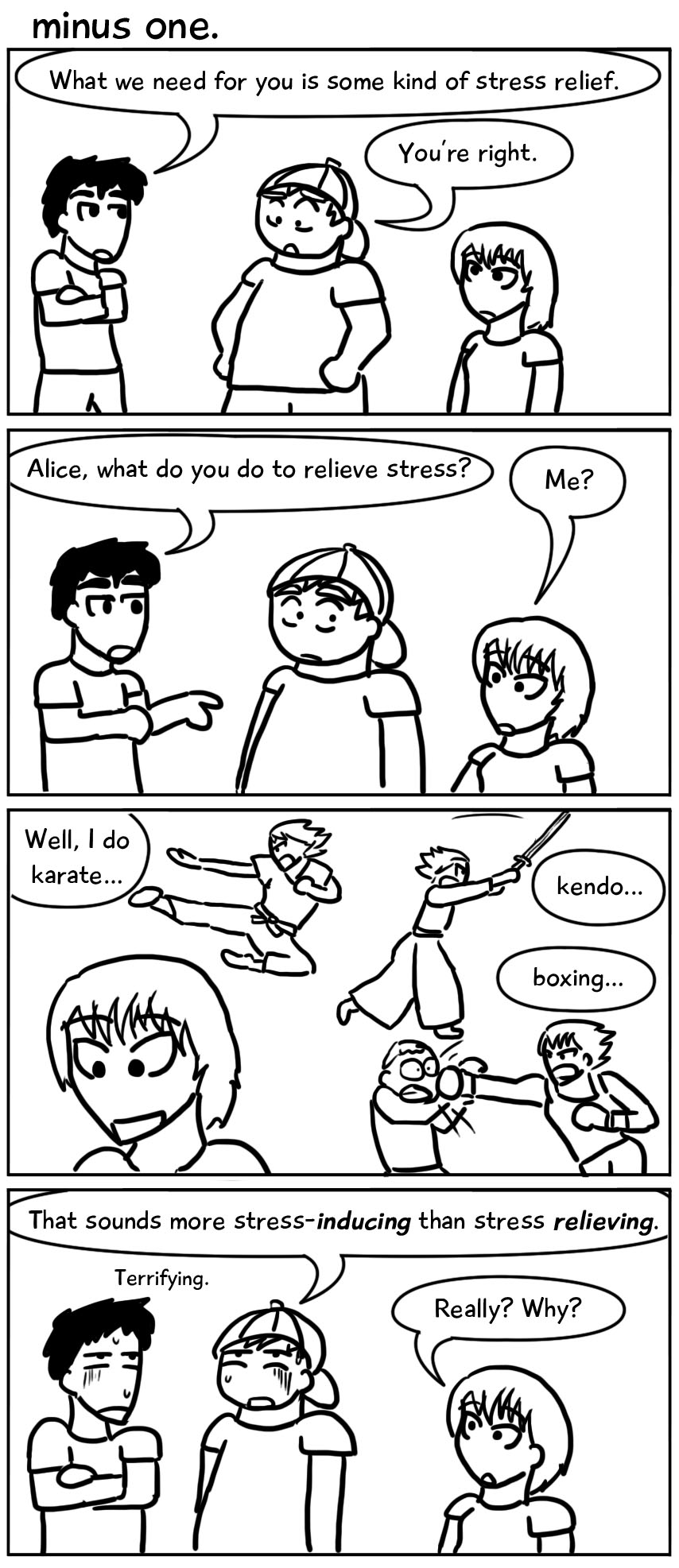
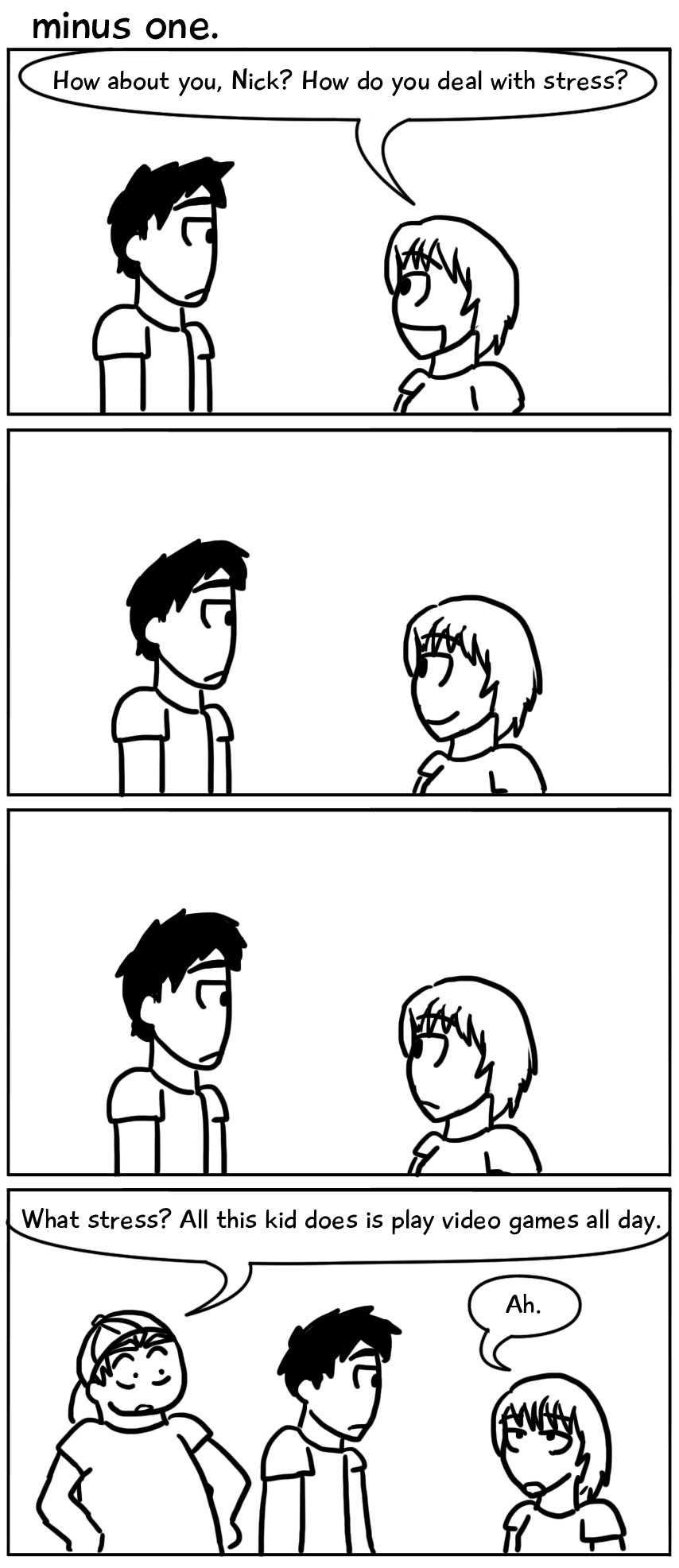
I’m on co-op this semester!
For those who are unaware, “co-op”– in Northeastern terms, anyway– is when a student takes off for a semester to work full-time for six months. It’s like an internship, except longer, and kids can actually get paid.
Which isn’t a bad deal! No classes, get experience, save up some money. I went through the process last semester, and got hired! I’m working for a research company located in the Boston ‘burbs.
In fact, Monday was my first day on-site. I came in, met my co-workers, met my boss, and tried to log into my new work laptop.

Technical troubles already? I talked to my boss.

So I called. They asked for my name, badge number, username, and…
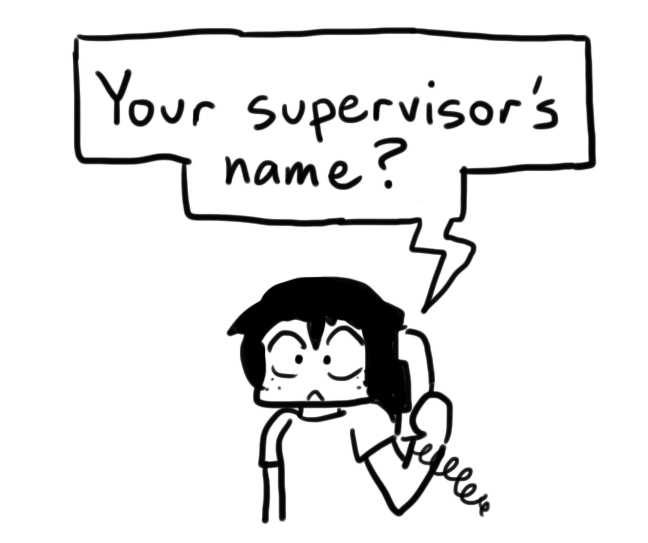
Keep in mind that the phone connection was a bit fuzzy. Also keep in mind that my boss was still standing next to me. Finally, keep in mind that, like my own last name, his last name cannot be spelled intuitively.
For confidentiality’s sake, let’s say my supervisor’s last name is Degortino.

Oh. Uh.

Might as well roll with it.

And that’s how you make a first impression.
.
.
.
That’s all I’ve got to say about that. Really, though, I can’t blog much about my new job! The leader of our new intern orientation told us,

There’re so many things I did in Japan that I never blogged about. Time for a blast to the past!
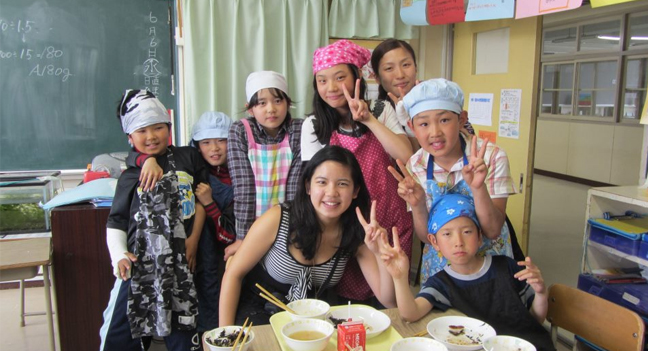
One of my more interesting experience in Japan was when we visited an elementary school. We spent the morning and afternoon at a school in Sapporo to give the grade-schoolers a taste of, well, gaijin! We, in turn, would get a taste of the life of a 小学生. (shougakusei, elementary school student) We were to hang out with the students, teach them some English, and expose them to our American culture.
Though, to be honest…
I think I learned more than they did.
Our very first activity, for example, started out with something I’ve never seen in the US: planting rice. From what I’ve seen, it’s typical for Japanese elementary schools to keep their own rice paddies, which the students help plant, tend, and harvest. And they saved their planting day specifically for the day we visited!
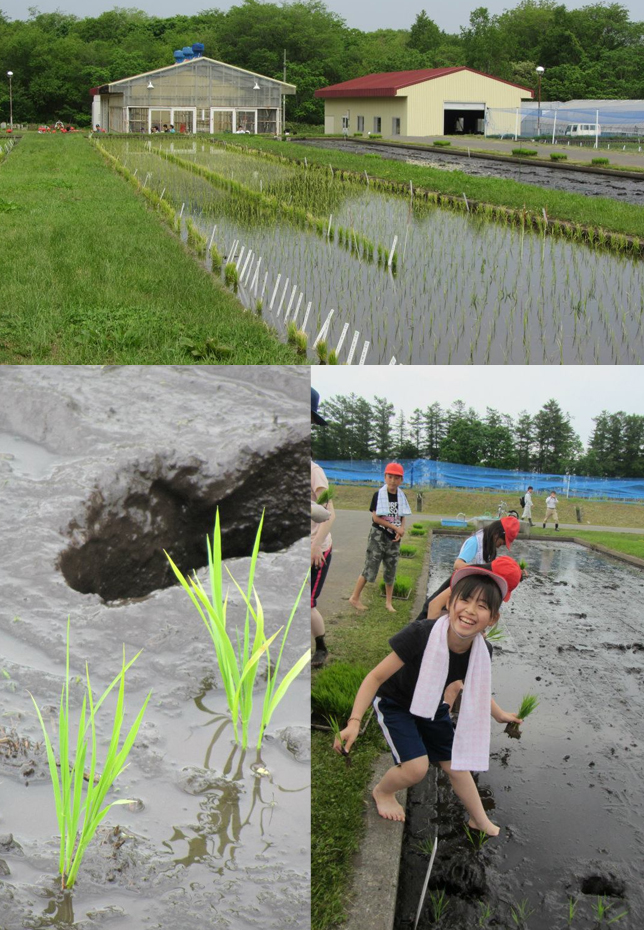
Despite the fact that both my parents grew up in Vietnam– my dad on a rice farm, no less– I hadn’t even seen a rice paddy before I came to Japan. I wasn’t sure what to expect. Though my dad’s stories of mosquito bites and peeling leeches off his legs gave me a general idea.
Well, I didn’t see any leeches, but I sure wasn’t expecting the paddy to be so deep.
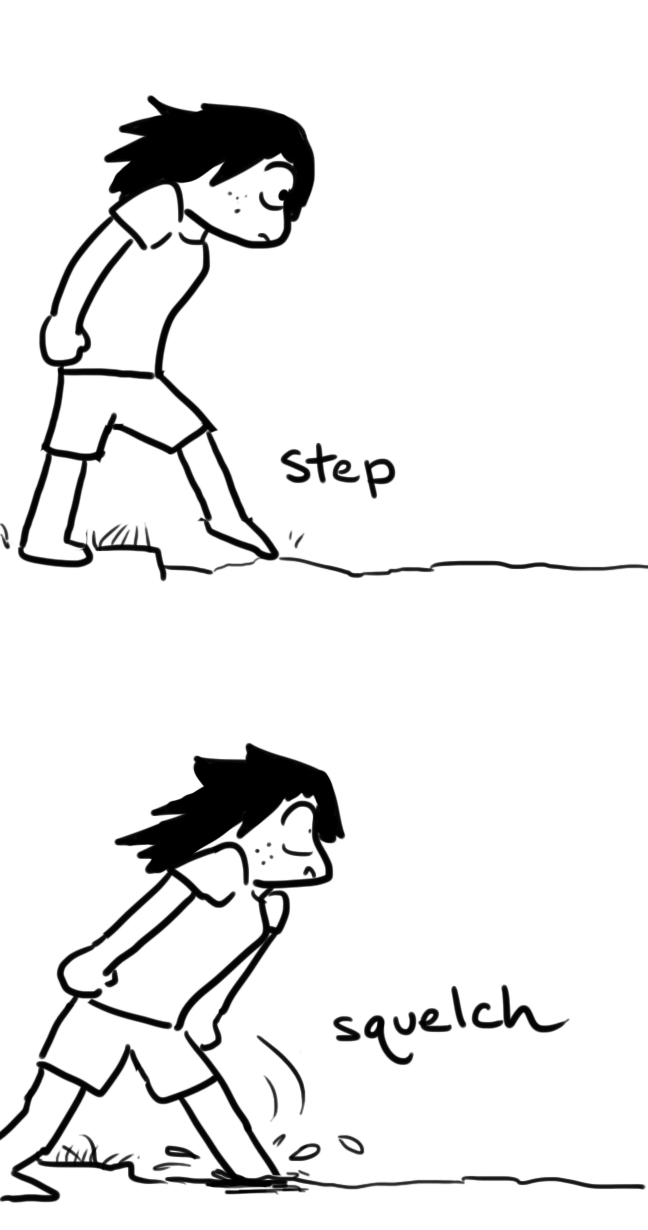
I also wasn’t expecting it to be so difficult!

But it’s okay. I still thought it was fun.
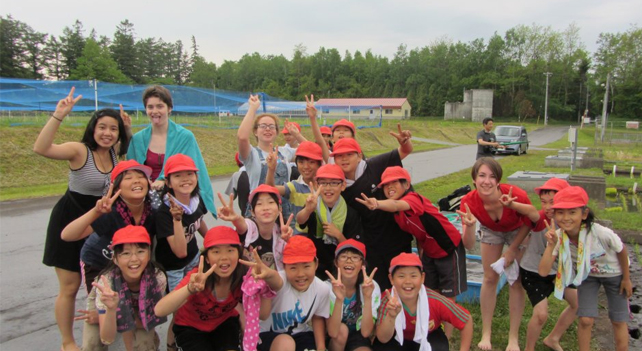
After rice planting was lunch, where we experienced another slight cultural difference. You know how, in America, lunch ladies serve the kids? Well, in Japan, the kids take turn serving you.
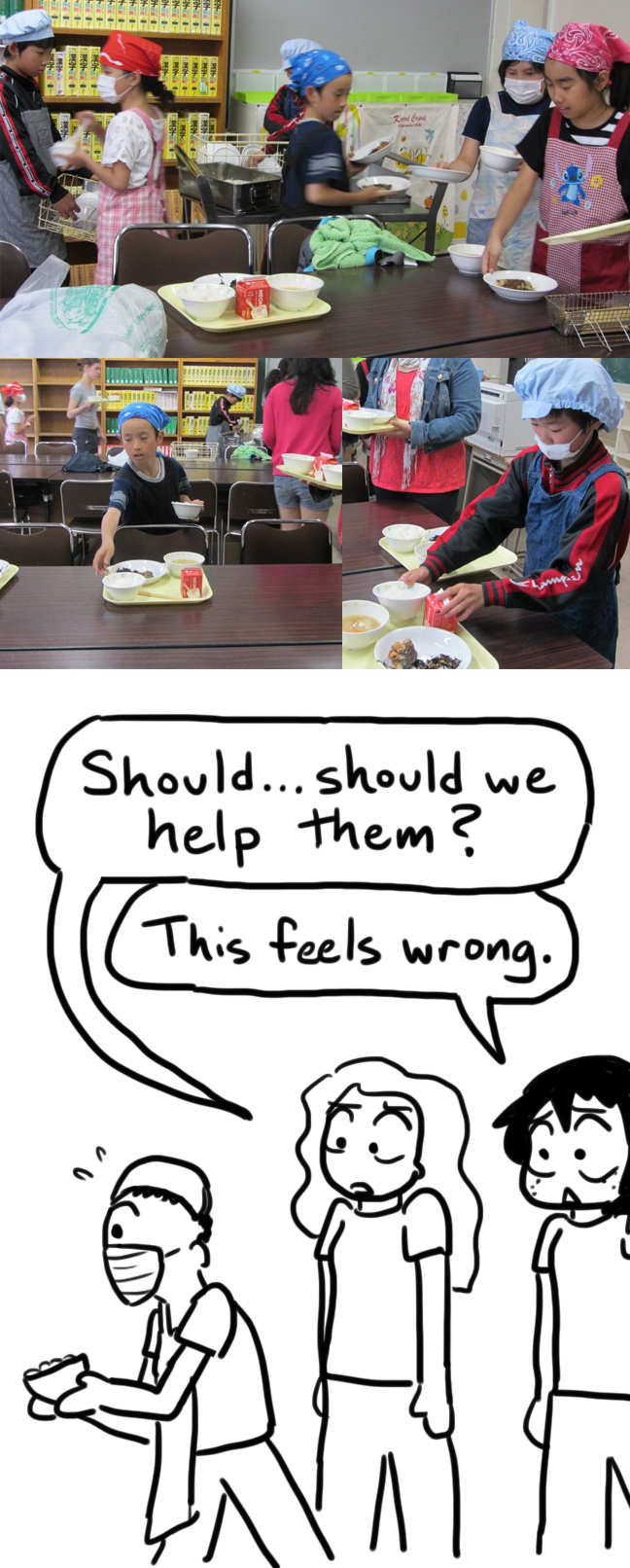
The lunch, as you’d expect, was completely different as well. Gone was the pizza and hot dogs and mozzarella sticks. Instead, we had a well-balanced meal of rice, seaweed, fish, vegetables, miso soup, and milk. Even the portion size was appropriate! Maybe a little too appropriate…

After lunch was, of course, recess. This was a throwback to elementary school– you know, kids playing tag, climbing the equipment, chasing and running and screaming. Though apparently frisbee isn’t a thing in Japan. One of our group members, an ardent Ultimate Frisbee player, demonstrated her skills. To the utter fascination of the kids.
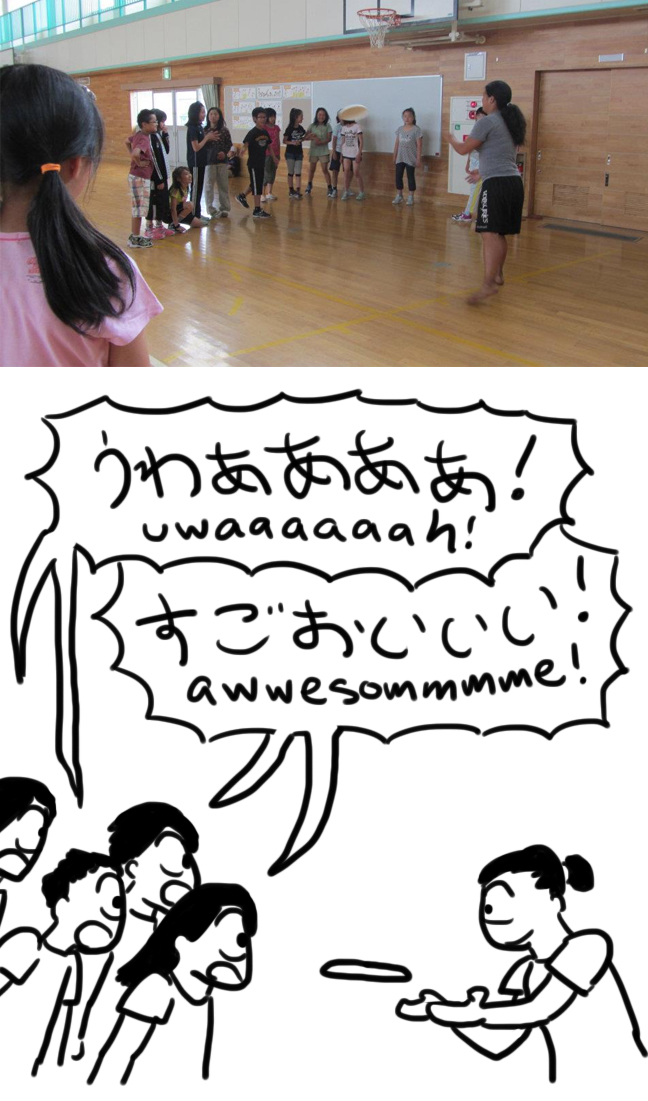
Afterwards, my group was broken up into several classrooms. Each American kid was assigned to a table of 4 or 5 students. First, I was put in a group of 4th graders…
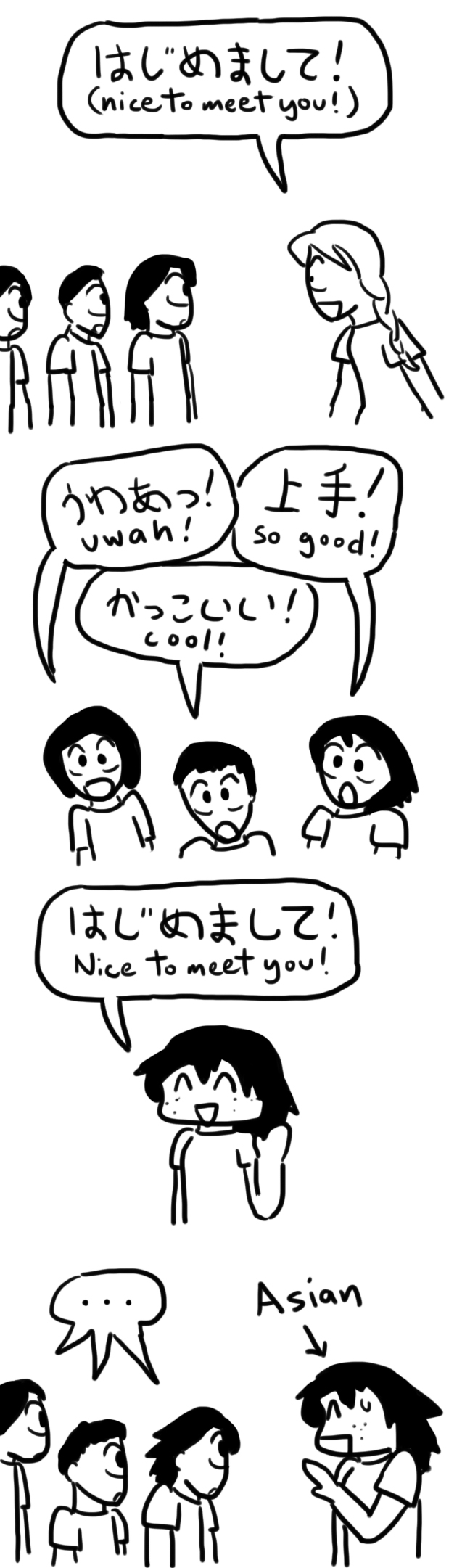
…and then, at the teacher’s urging, I taught them rock, paper, scissors.
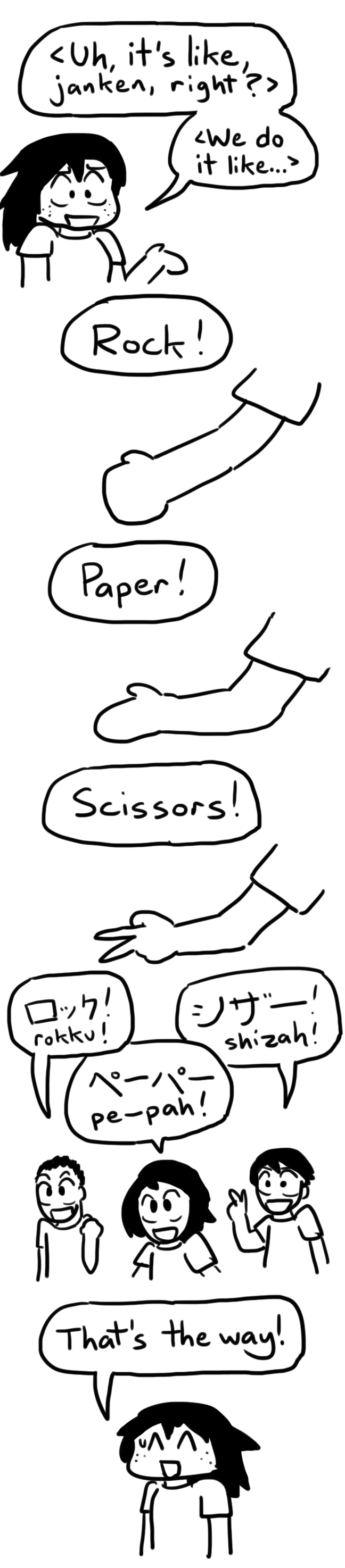
After an hour of rock, paper scissors, including a highly competitive class-wide tournament, I was spirited away to another classroom of 5th graders. This time, there was no lesson. Instead, they were supposed to incorporate me into their, uh, “group” as they hung out in their free period.
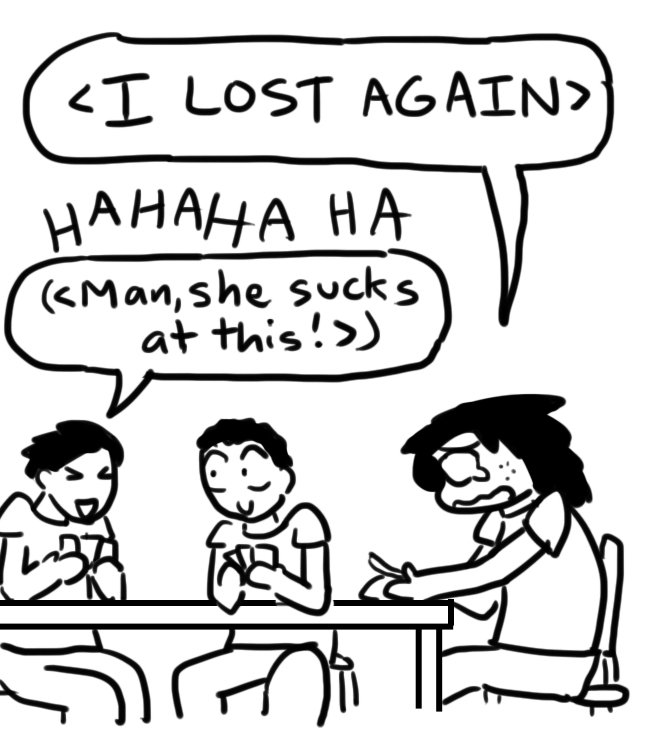
First, they whupped my butt in a Japanese version of Old Maid…
Then they taught me how to make paper cranes.

I also tried to converse with them, which was difficult, since all the kids spoke really fast and used a lot of slang. I did manage to ask to see their English textbooks, though.

Japan is notorious for its substandard English programs. I got to see why. (not like America is that great at foreign languages, though)
Before we knew it, it was time to leave. My group exited the building to much fanfare. Several of the kids followed us to the exit, and kids would pop out of their classrooms to take a look at the interesting gaijin. We got a final look at one more cultural discrepancy:
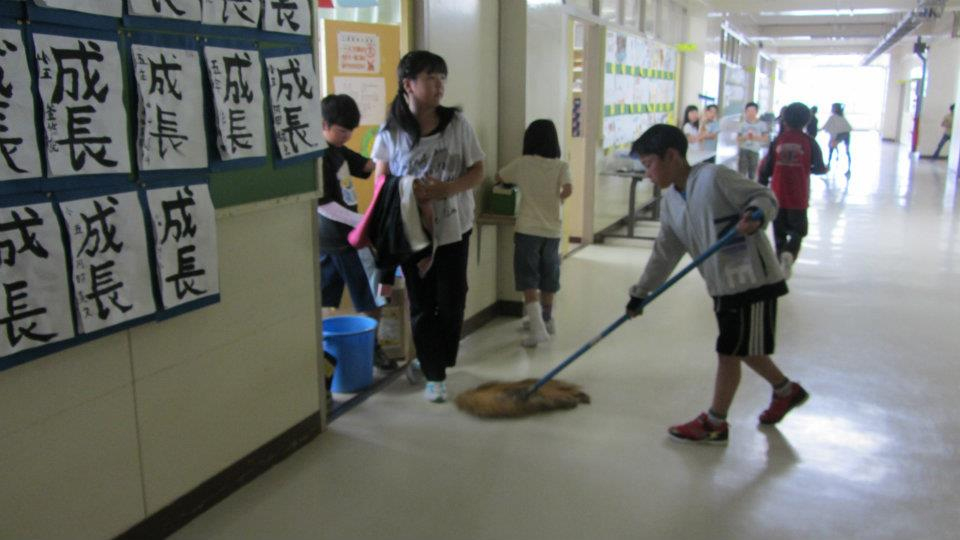
The kids clean their own classrooms in Japan. Now that’s a reason not to stick gum under your desk.
And then we were free. The Japanese elementary school was different, for sure. Simply in cleaning their own classrooms and serving their own meals, there was a sense of greater discipline and responsibility. Japanese students eat lunch in the classroom. None of the grade-schoolers were allowed to eat until everyone had been served. I didn’t get to sit in with a real lesson– but those little quirks already showed the difference between American and Japanese culture.
Yet the Japanese kids were just like American ones. They were blunt to a fault. (One of our students got called “hairy.” Another Japanese kid paused, pointed to our Chinese student, and said, “Made in China.”) They play the same games as us. They were hyperactive and crazy and loud just like American kids.
In the end, kids are just kids, right?
Even on the other side of the world.
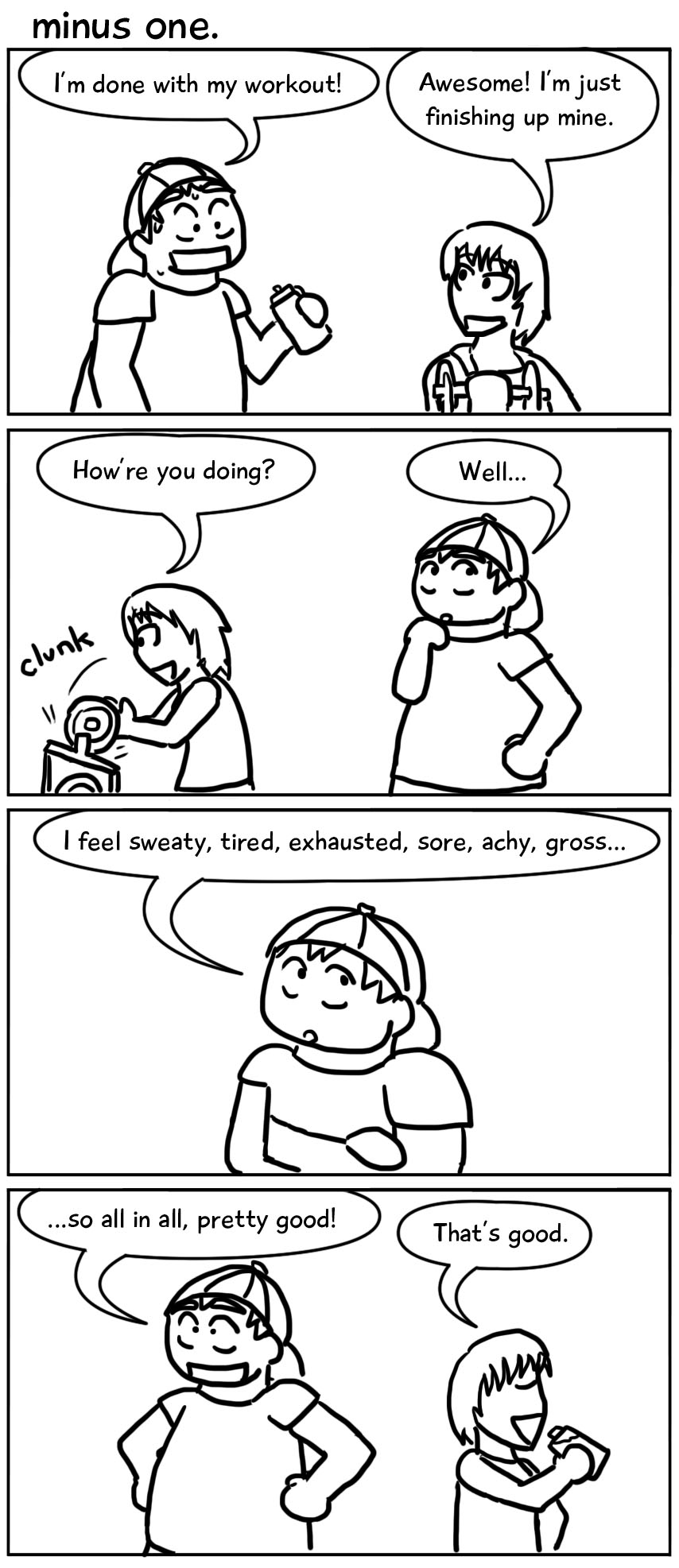
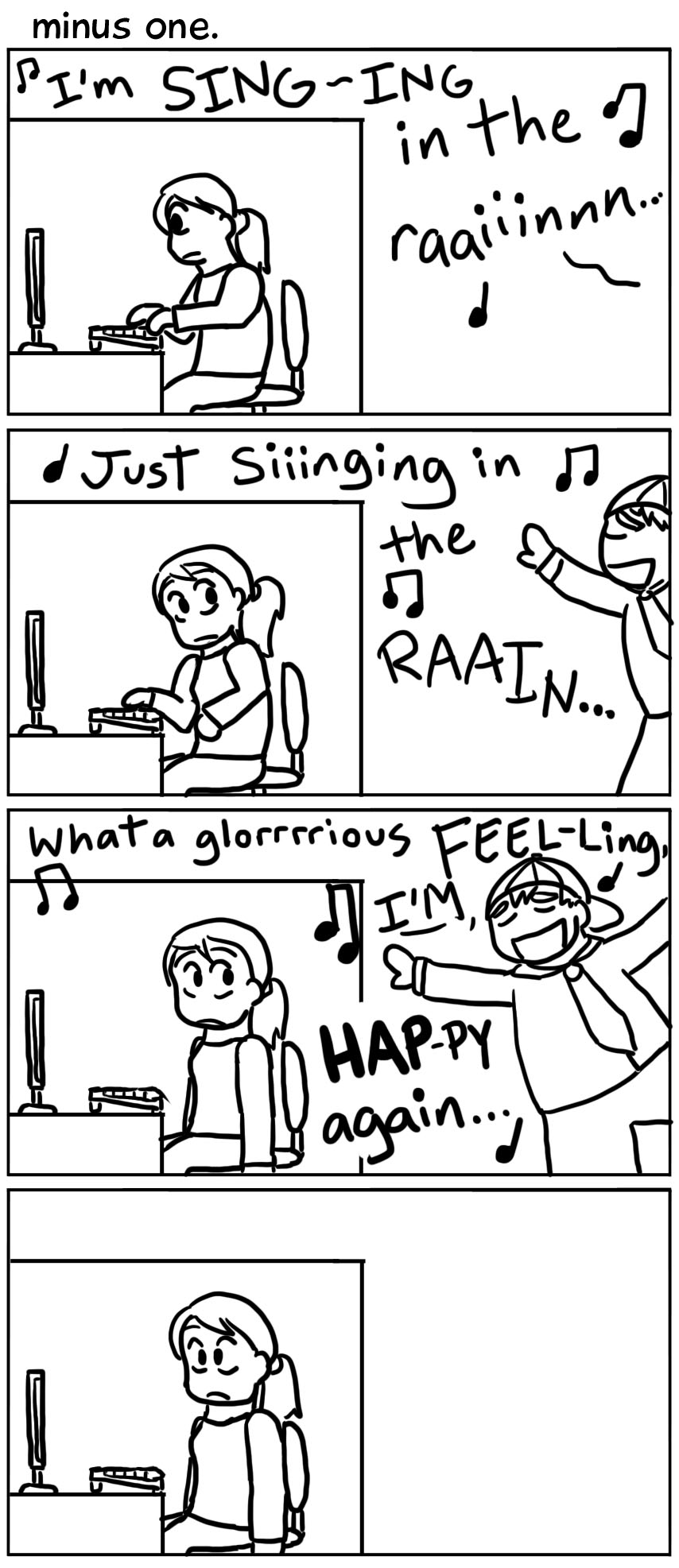
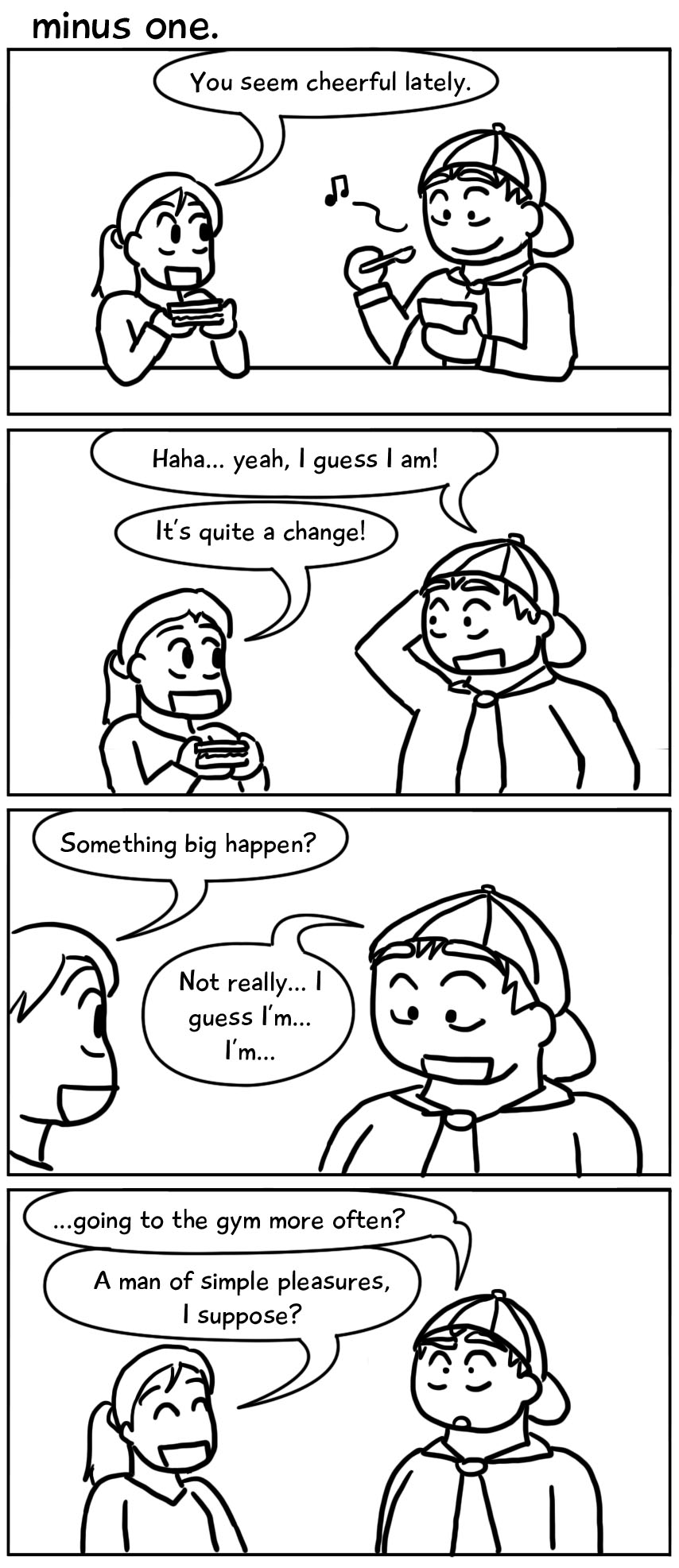
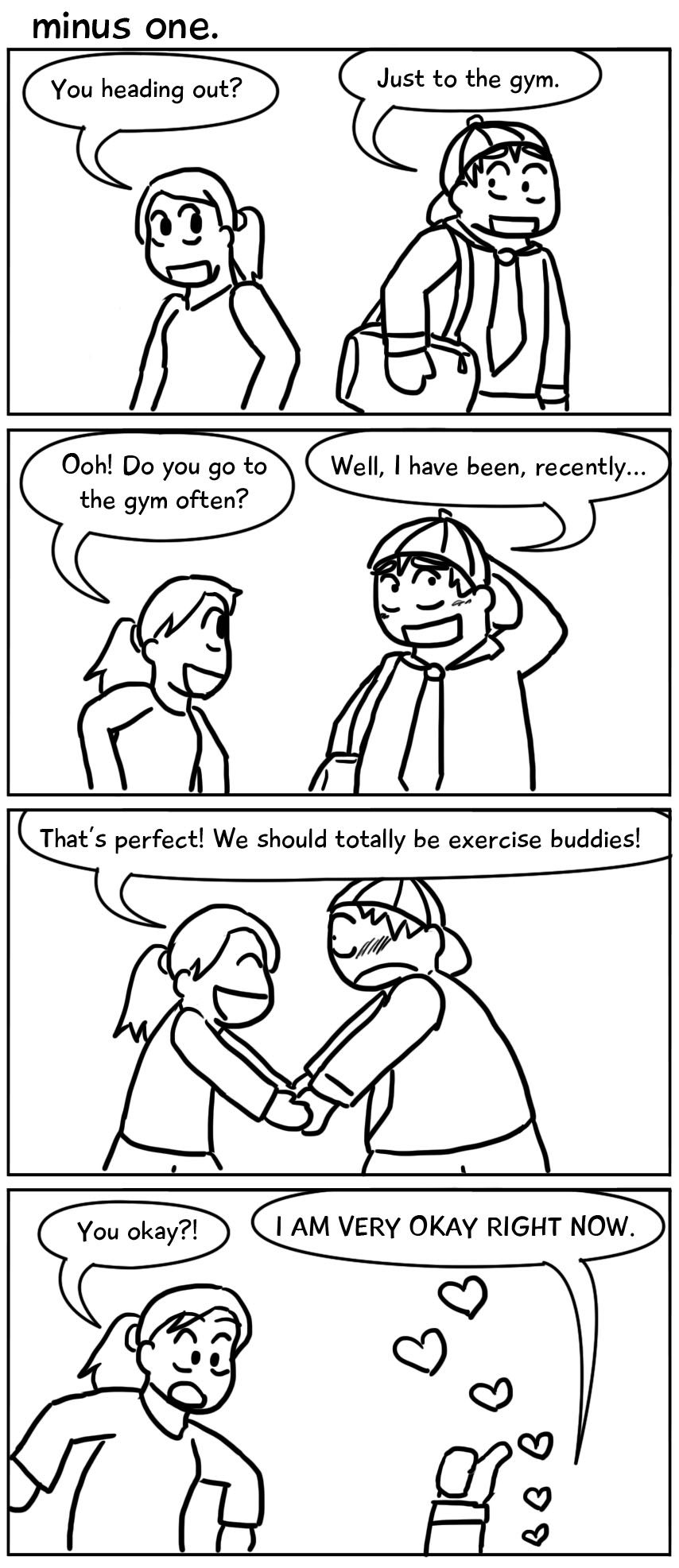

One of the biggest events at Northeastern every year is a little game known as Husky Hunt. Husky Hunt is, in short, a scavenger hunt. It’s been going on for a few years now (I think the first one was… 2005? 2006?) and is hosted by NU’s Resident Student Association.
Husky Hunt has escalated in popularity in recent years. I believe that, this year, somewhere around 120 teams or so registered to participate. (Don’t quote me on that! I heard it down the grapevine.)
That may sound strange to you. I mean, why do so many college kids want to do a scavenger hunt so badly? What makes it so great?

Husky Hunt may be a scavenger hunt, but it’s a scavenger hunt taken to epic proportions. First, Husky Hunt takes place over a course of 24 hours. No breaks. That’s 24 hours that participants have to stay awake. And, in the case of many kids (like me) we also have class, work, and the like before the hunt begins, forcing us to stay up even longer.
Second, Husky Hunt isn’t restricted to just Northeastern’s campus. Nope, Husky Hunt takes place all over Boston. And even more: clues are also in Cambridge, Brookline, Somerville, Quincy… hell, there have been clues in Rhode Island before.
I should mention that cars aren’t allowed. No, hunters must make do without the use of motorized vehicles. (Public transportation is okay, though. Taxis are not.)
Finally, the prizes for winning Husky Hunt are crazy. One year, all the members of the winning team received Kindle Fires. Another year, they all got round-trip plane tickets to anywhere in the US. This is serious business.
Husky Hunt is simply one of those things you have to do before graduating. Even if you lose– and Husky Hunt is super competitive– it’s all about the experience.
I had to do it.
Not that it’s easy to become a participant, either. First, you have to set up a team of exactly 12 members. Then, you have to get your team qualified. I said earlier that around 120 teams signed up. Only 50 actually get to hunt. How does RSA decide who’s in and who’s out?

In order to weed out the less serious teams, RSA releases a quiz to every team captain. The team must finish the quiz within a day. The quiz is only a dozen questions or so– but they are the most insane of questions.
Like, not even brain benders. Just impossible riddles with the most ambiguous of hints that you really have to get lucky to solve.
I can’t even provide an example.
If the team manages to pass that, they are then able to participate in Husky Hunt. Husky Hunt took place from 7PM, November 2nd (a Friday) to 7PM the next day.
As you can guess (because I’m writing about it now) I was on one of the qualifying teams.
Now, while Husky Hunt is a serious undertaking, a lot of people just do it for fun. As a result, Husky Hunt teams can be divided into a few different categories:
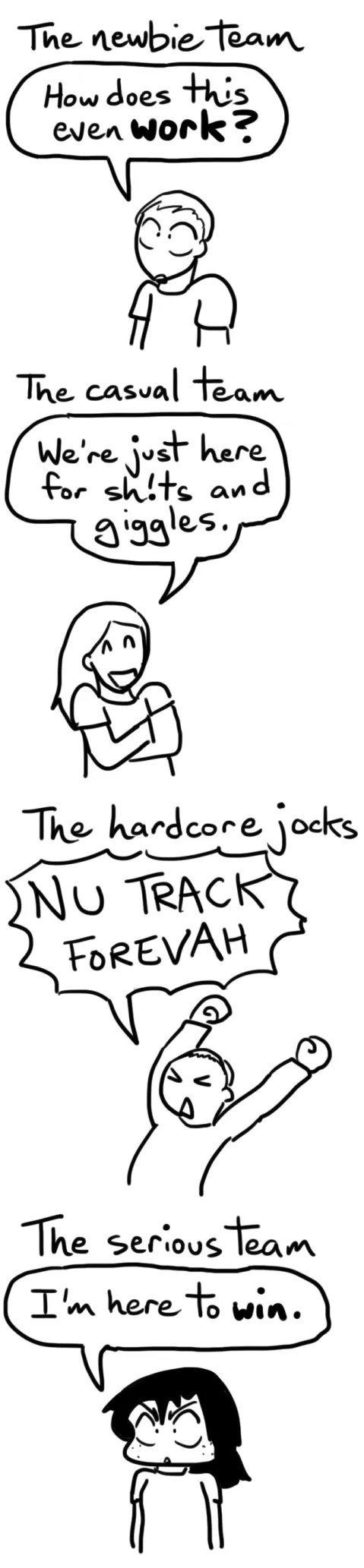
I was, surprisingly enough, on a serious team. My team was comprised of mostly seniors, seniors who had done the Hunt before. Last year, their team had placed 5th out of 50 teams. This year was their last shot, so they were here to win.
And so was I. My roommates had put together their own team, and it was only natural that I had to beat them.

That Friday, the hunt began.

Each team received a set of hints– a set that numbered over 600 clues. 600. Most of these clues were locations in and around Boston. Teams were supposed to find these locations and take photos at them. The photos are then submitted to RSA before the end of the hunt on a USB drive.
That wasn’t the only thing going on, though. RSA also ran a constant stream of on-campus challenges. Races. Puzzles. Games. At each challenge, only a limited number of people could participate. Teams would receive text alerts throughout the 24 hours, leading to this every time a new one arrived.

There were even Twitter challenges, Youtube challenges, challenges demanding that you bake RSA a cake, or buy them Pokemon cards, or…
My team didn’t do any of that.
We had our reasons. I mean, the on-campus challenges are fun, but competitive. I was on a team full of engineers and gamers and science-y kids. We were up against track stars and hockey players and general jocks.

Instead, we focused on the clues. The locations. What we lacked in athleticism, we would make up in intellect. Or with this insane phone app one of our members developed:

That member flew in from across the country to participate in Husky Hunt. That’s true devotion.
At any rate, our team split up into groups in order to cover more ground. I was put into the “fast” group– aka the team that covered the most distant clues. I’m no athlete, but I had confidence. I could bike. I could survive this 24 hours.
Since I’m living and breathing and writing this post now, I obviously survived.
But only barely.
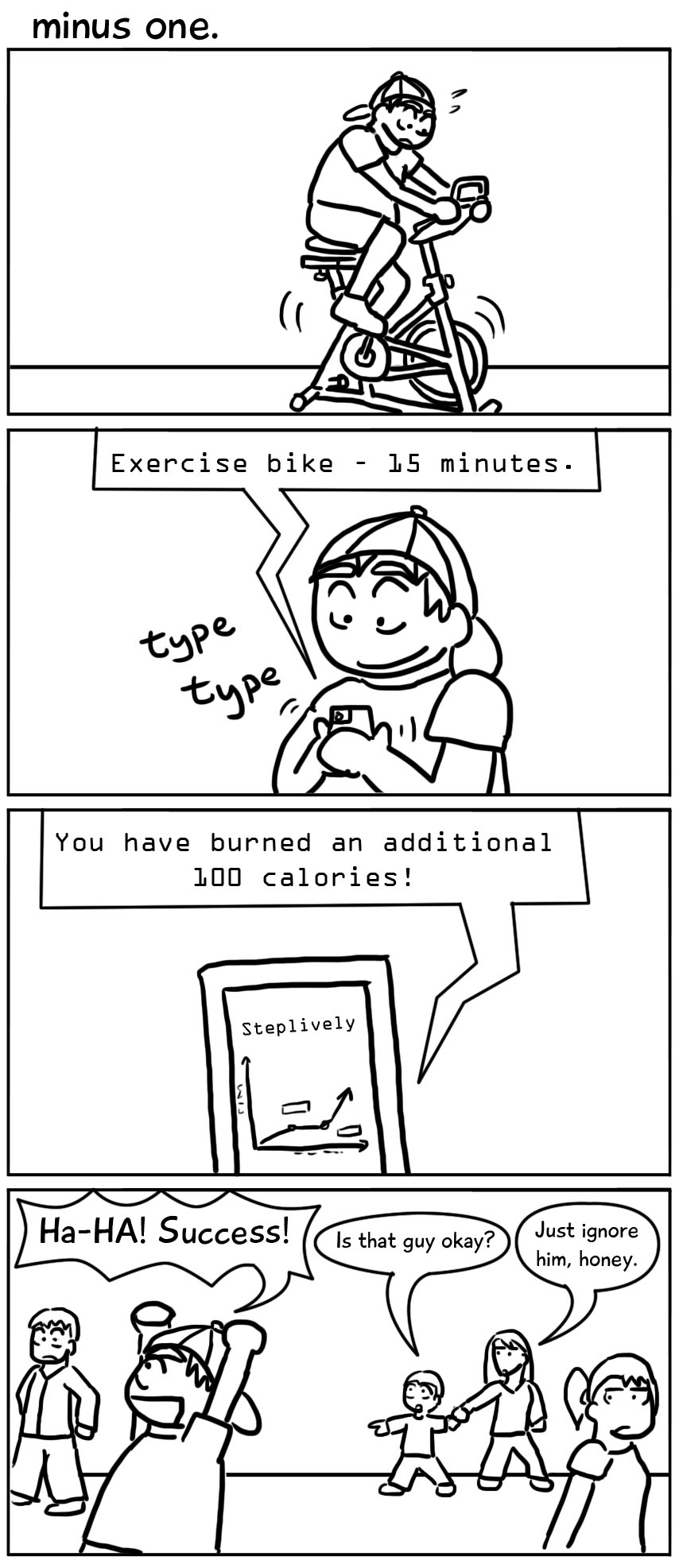
That night, I saw more of Boston than I have… ever. We biked everywhere. From Northeastern to the North End to Science Park to Cambridge, circling around for miles, looking for clues. Take a look! (Photo has been edited to reflect emotional state at the time: )
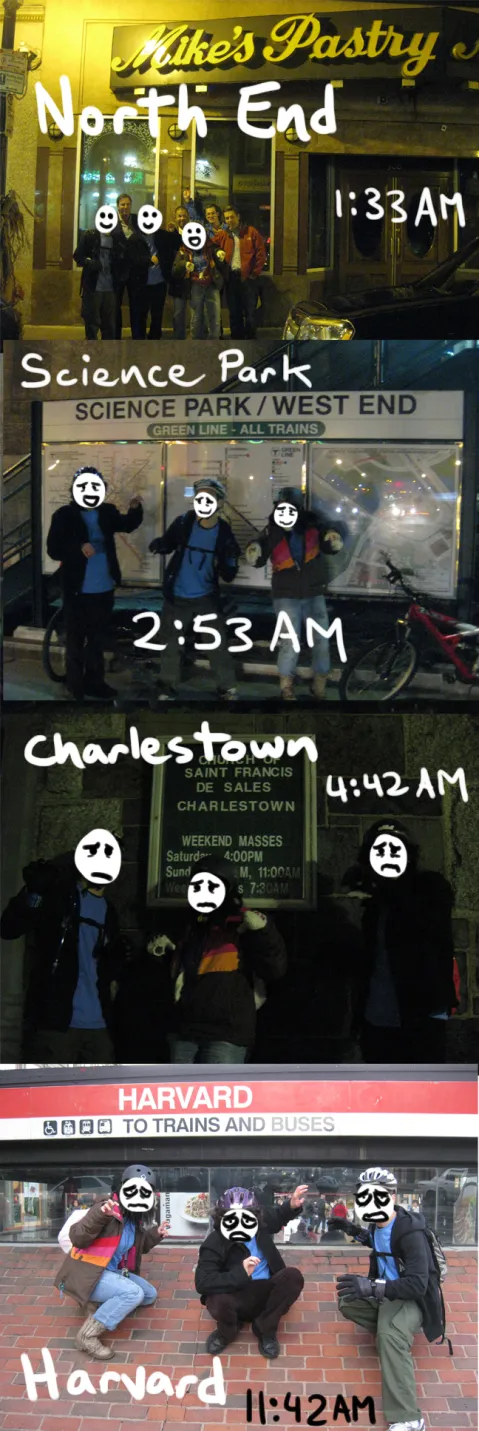
Accordingly, I learned a little bit more about Boston and our nation’s history.
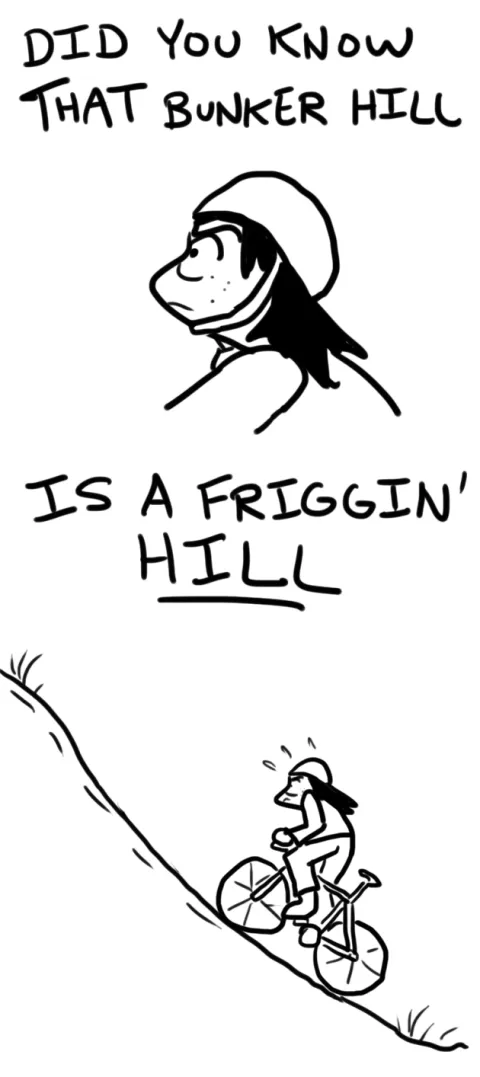
I also learned that everywhere can be biked to. EVERYWHERE!

I learned the limits of my (lacking) physical prowess. At a certain point of the hunt (probably around 4 AM or so) I definitely started to feel the effects of sleep deprivation, freezing temperatures, and physical exhaustion.

The fact that we were biking around Charlestown at 4AM, when it was completely quiet and deserted and eerie, didn’t help.
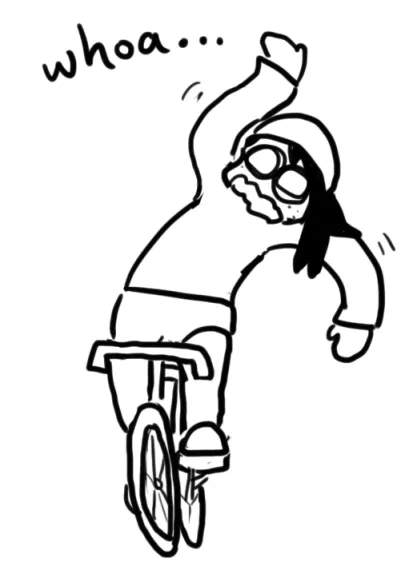
By the time daylight arrived again, my team barely spoke to each other. No small talk was exchanged as we biked. We only spoke when it was completely necessary.
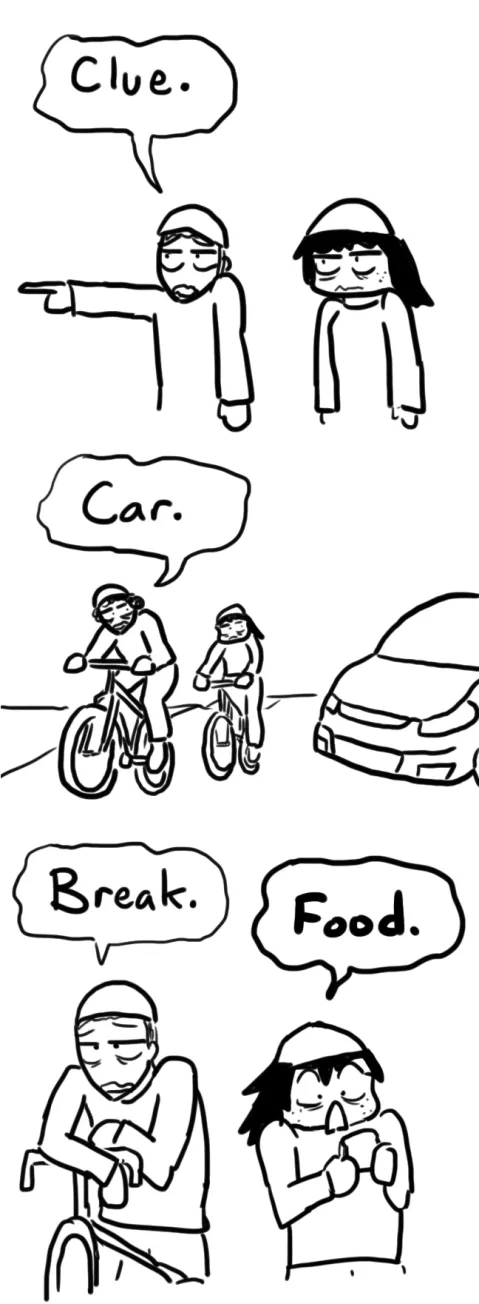
Which was just as well. By the end, everything seemed surreal. Like I was dreaming. It was probably a bad sign.
In total, I think I was actually biking around 9 hours or so. Which actually isn’t too bad– I have friends who were up and about for the full 24 hours. My team had some time to take breaks– as we did in the Northeastern library.
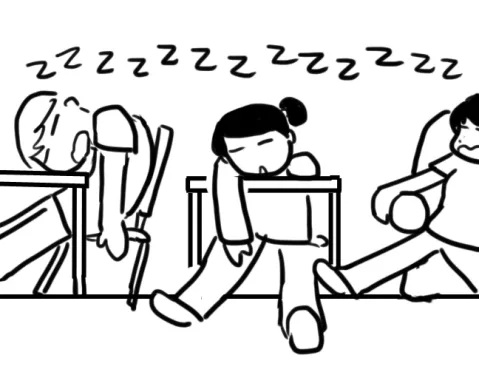
A couple of hours before the 7PM Saturday deadline, we crunched through all of our photos, put ’em together on a flash drive, and rushed to NU to hand them in to RSA. As a congratulations for completing the hunt, RSA gave out free ice cream.

And that was that. Husky Hunt 2012 was over. I returned home and proceeded to sleep for 13 hours.

But who won?
RSA took their time grading each team’s submission, or maybe they didn’t– they had a lot of clues to look through, after all. Either way, we didn’t find out the results until a month later. They announced the results on a boat.

Yeah. Like an actual boat.
All Husky Hunt volunteers and participants are invited to a cruise each year after the hunt is over. There’s a bar (for 21+ only, of course) a dance floor, a DJ, some food…
While not everyone was enthusiastic about being in the emotionally taxing Husky Hunt, the cruise everyone could enjoy. Including myself, as I went.
The cruise ran from 12AM to 3AM, since RSA really enjoys not letting people sleep. At the end, they announced the results, starting from last place and going up to first place.
I was nervous. My team had worked hard. I play to win. I wanted to win.
They got through the bottom 10…

Then the next 10 teams…

Then the next…

And the next…

And at this point I was freaking out a bit. My team had not been called yet, meaning we were in the top 10. The top 10! I listened in…

8th! My team had placed in 8th. Not bad. We even got a prize!

And then Husky Hunt was truly over.
So the question remains: Would I do it again?

Though my friends won’t agree with me, I had a blast doing Husky Hunt. Even though I was with people I didn’t know, going places I’ve never been, it was simply… an experience. We were cold. We were tired. We were miserable. Don’t get me wrong. But there’s something about Husky Hunt that makes people do it over and over and over again. Is it the sheer scale of the event? The camaraderie? The whole experience? I don’t know, but it’s there.
So, Northeastern kids? Do the hunt. At least once.
Or don’t. Less competition for when I rock ultimate at Husky Hunt next year.
.
.
.
.
.
.
Can I just talk about Assassin’s Creed III for a moment? I just finished it and now I’m all like


