




Heya!
Before I start this nutty comic, I’m going to add some context for those who are unaware:
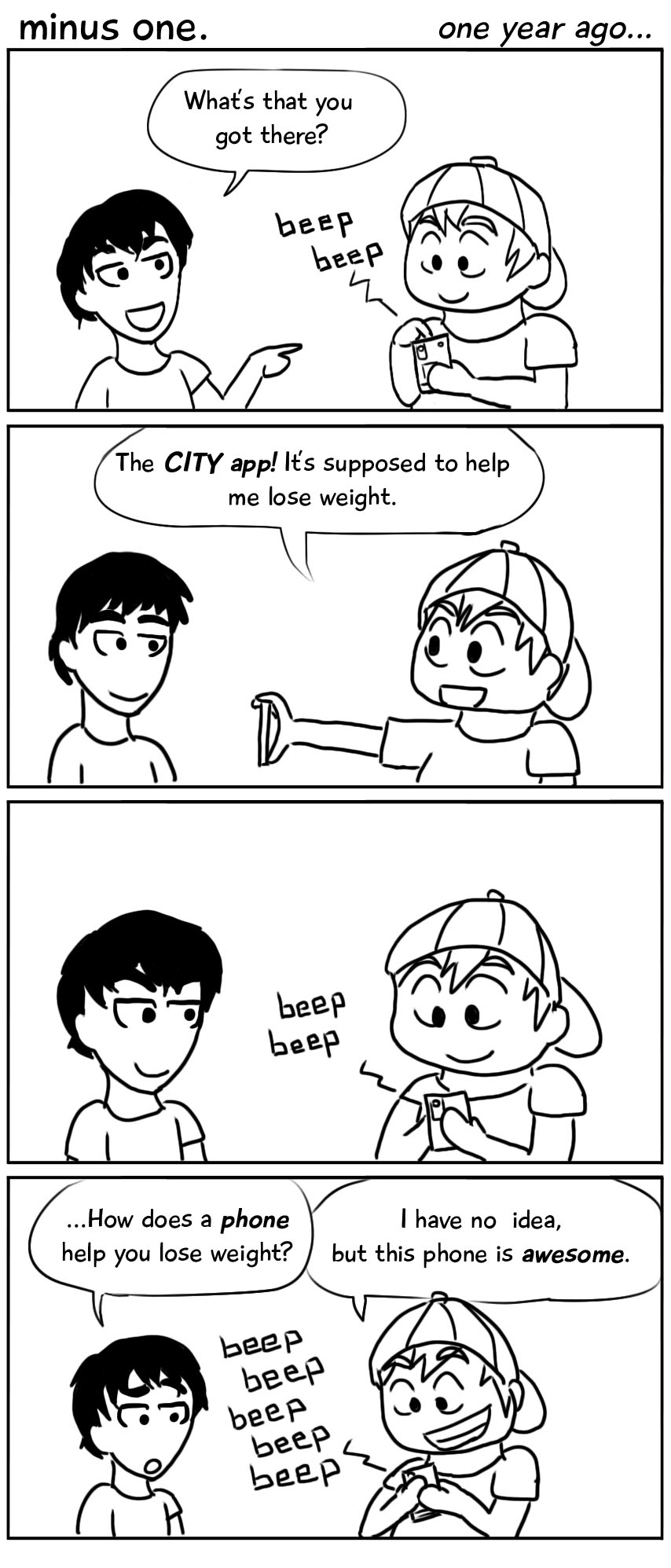
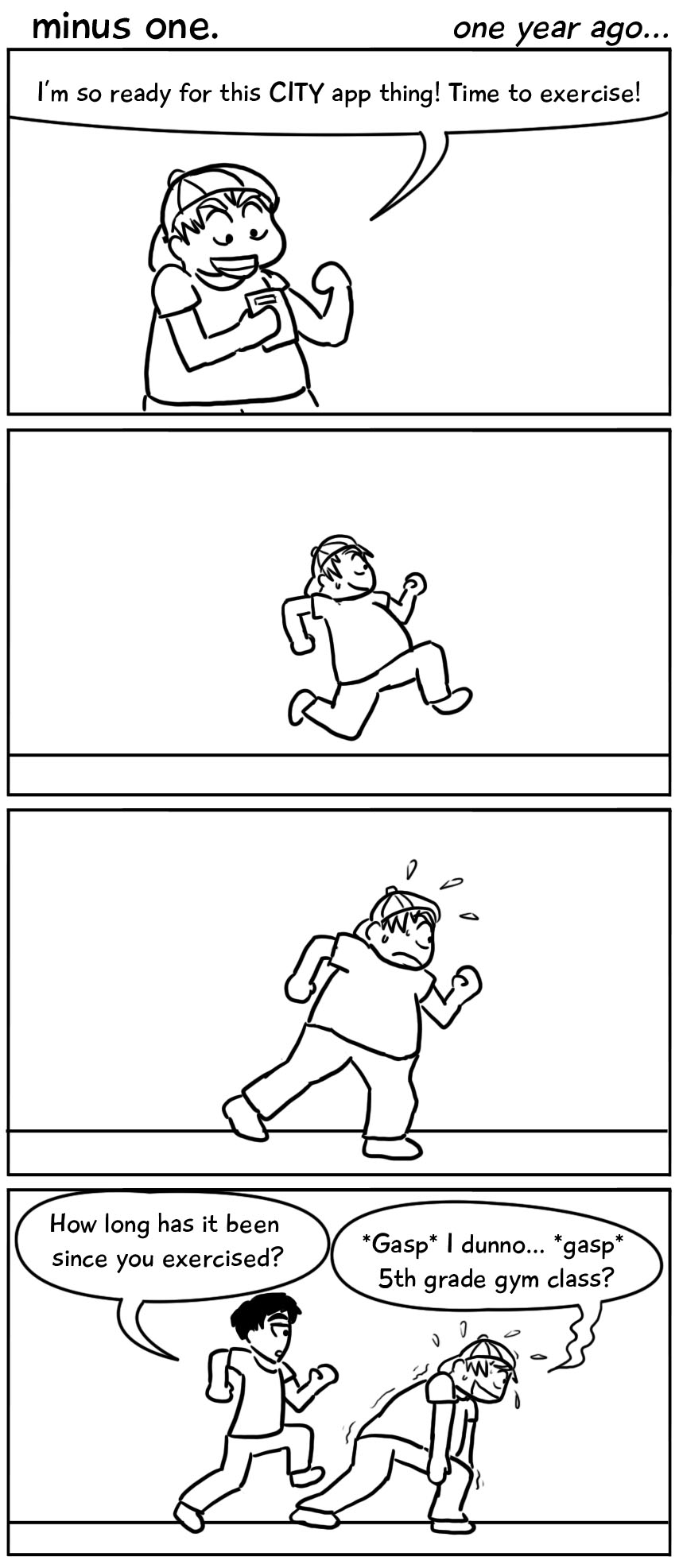
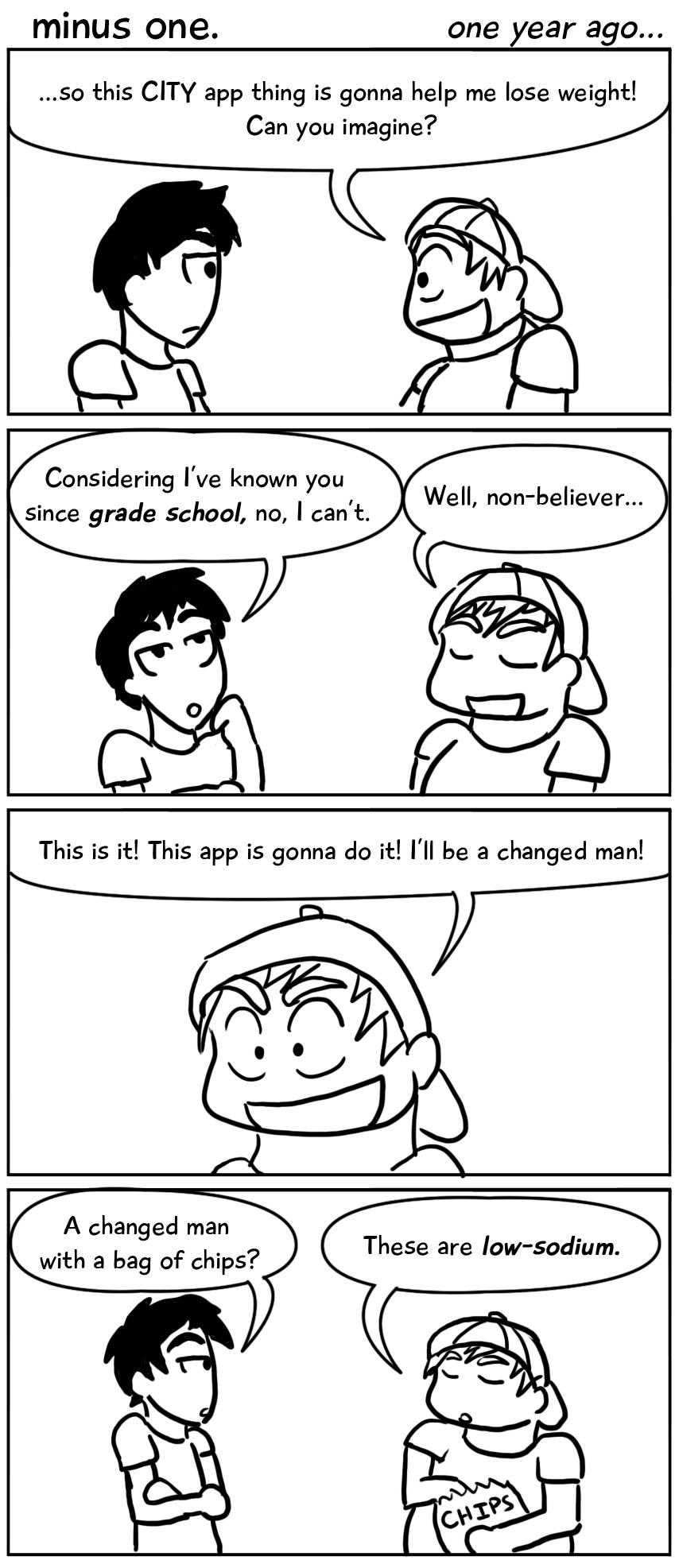
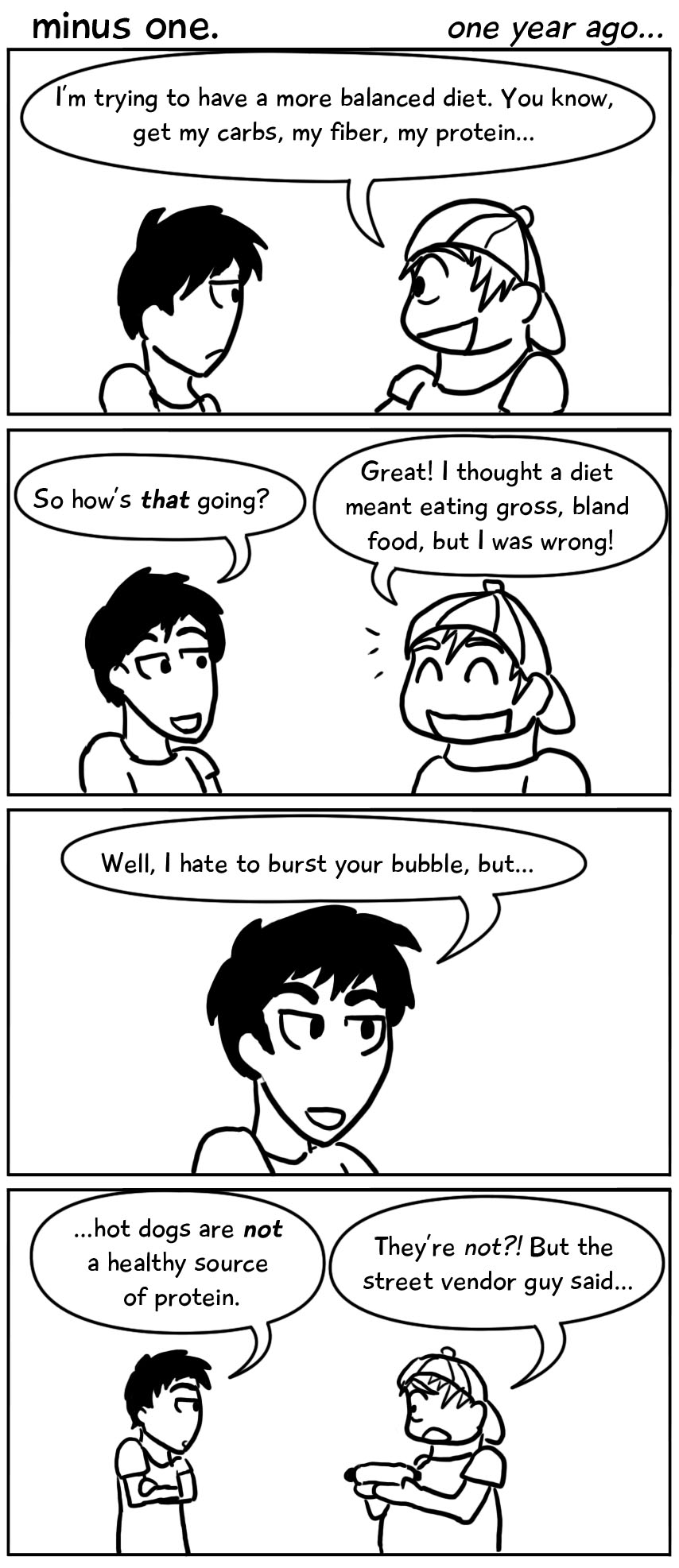
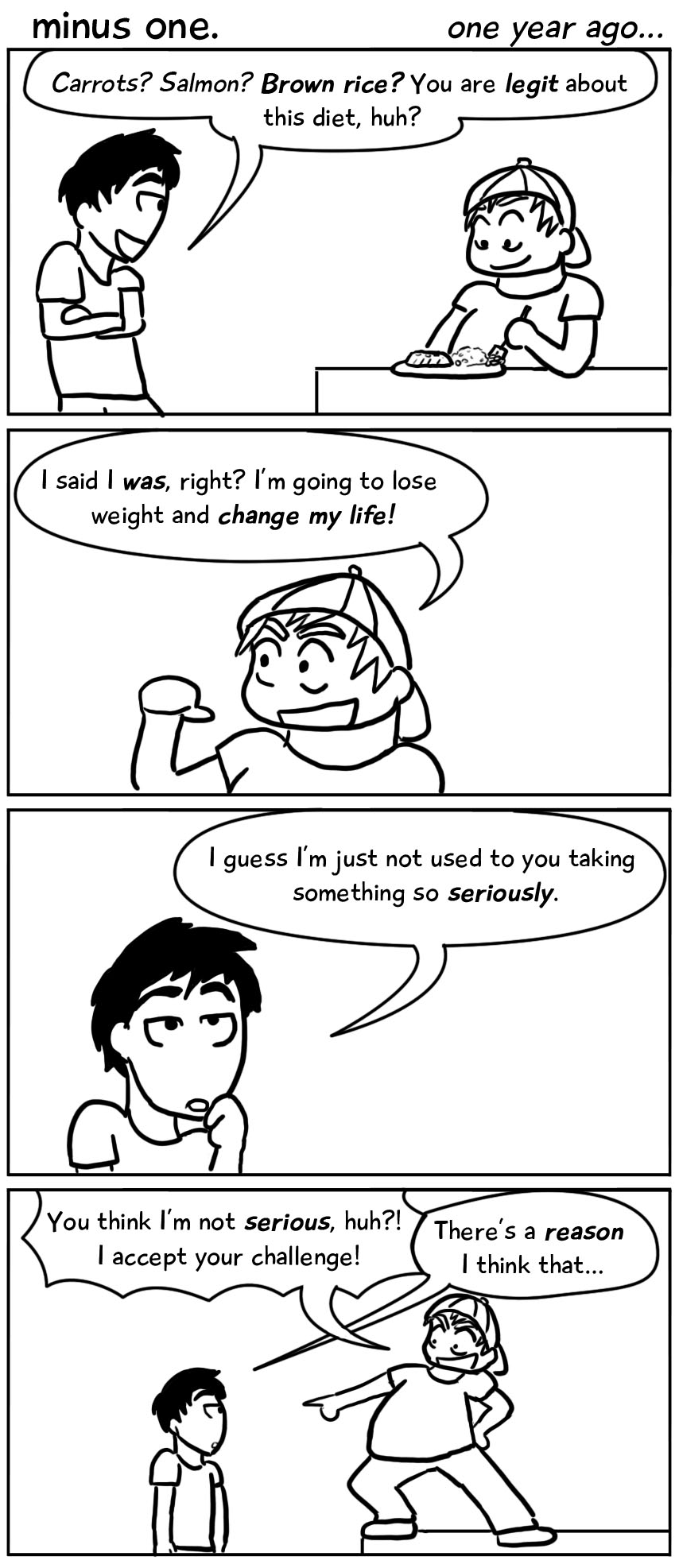
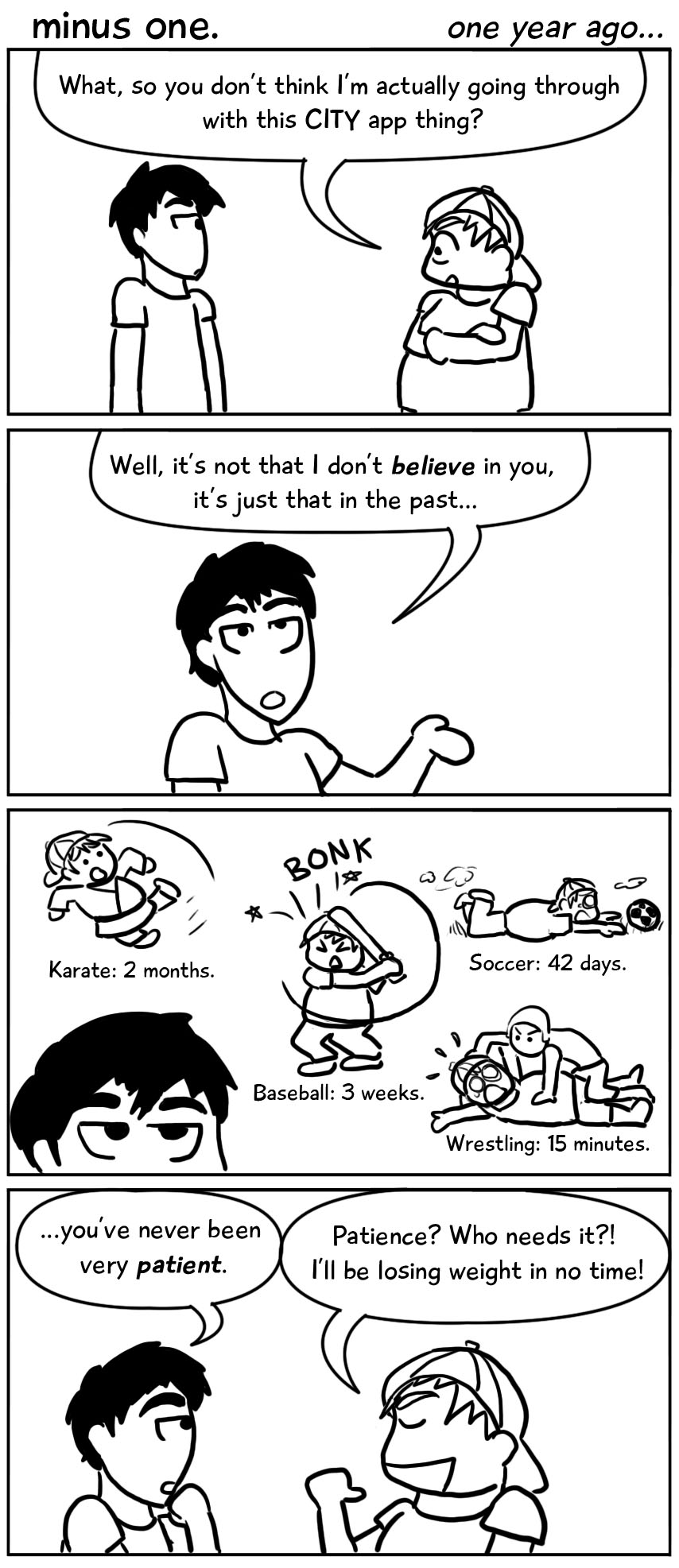
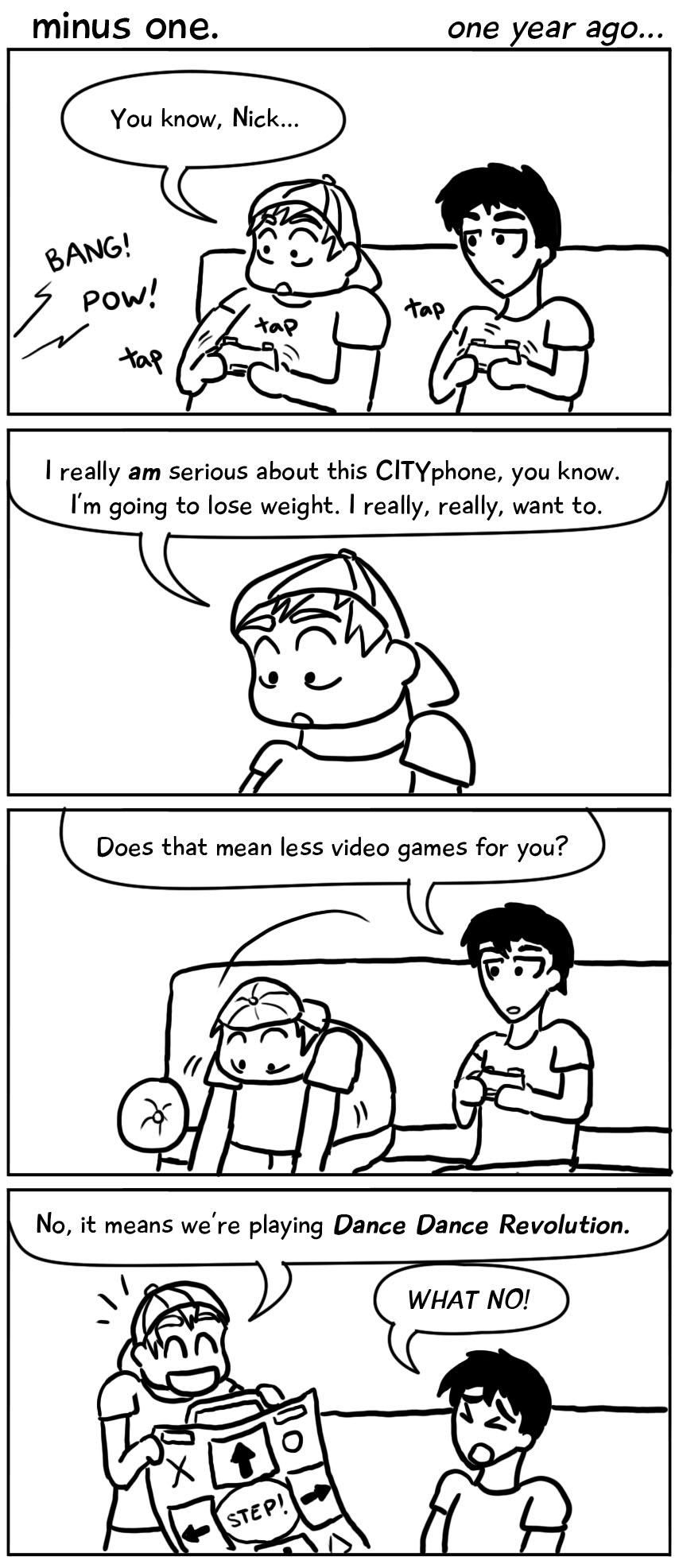
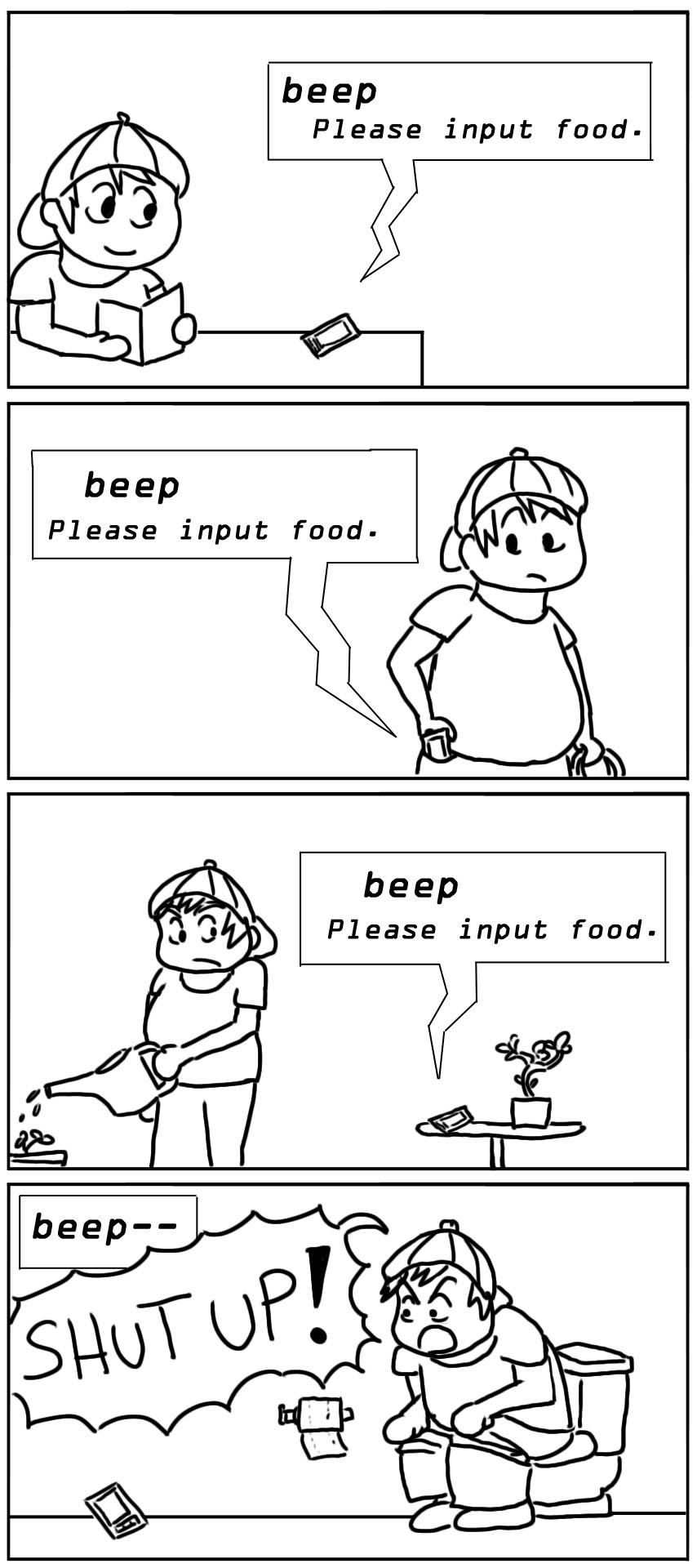
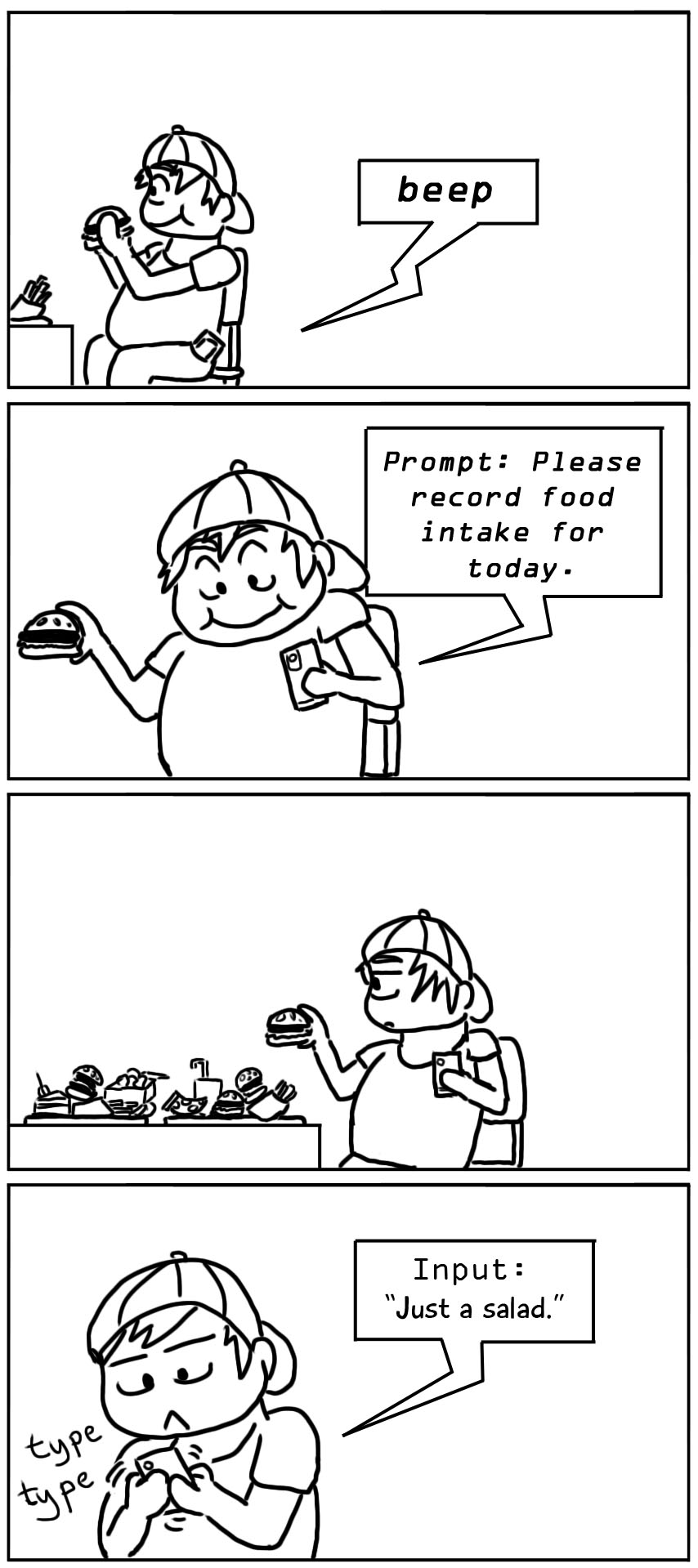
This is a comic about weight loss. There’s this study being done at my school, where participants use their cell phones to help them lose weight. They use this program called the CITYapp, where they can input their food and exercise to track the amount of calories they’re consuming. In addition, the phone also prompts them several times a day as a reminder. It’s kind of like using Weight Watchers or Livestrong or My Fitness Pal on your phone, except your phone is also constantly pestering you.
And, as this study is for two years, your phone is pestering you for two years.
People get sick of it.
That’s where I come in. The professors in charge of this study wanted to give this app some pizzazz. Something that would make it interesting enough for people to keep using it. Therefore I was hired to draw comics for the CITYapp, in the hopes that it would make people want to use their phone. I came in when there was a year left in the study– and since the participants use their phone every day– I was told to write a comic for each day, for a year.
These are those 365 comics.
365 comics about weight loss.

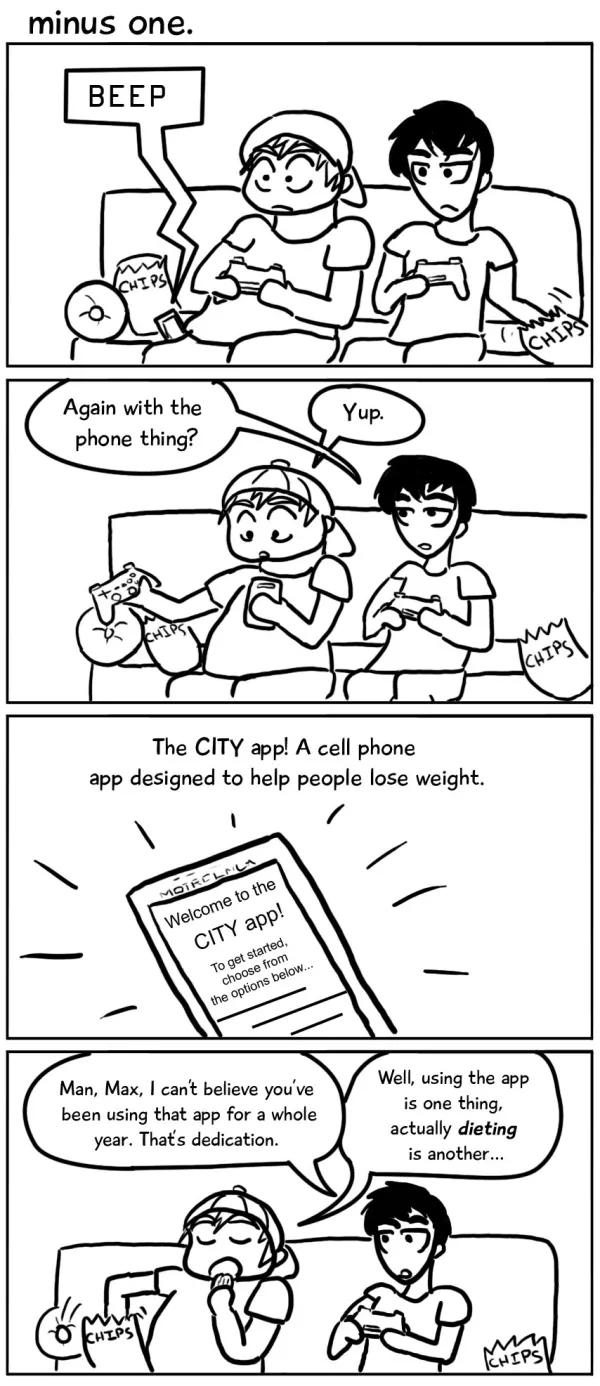
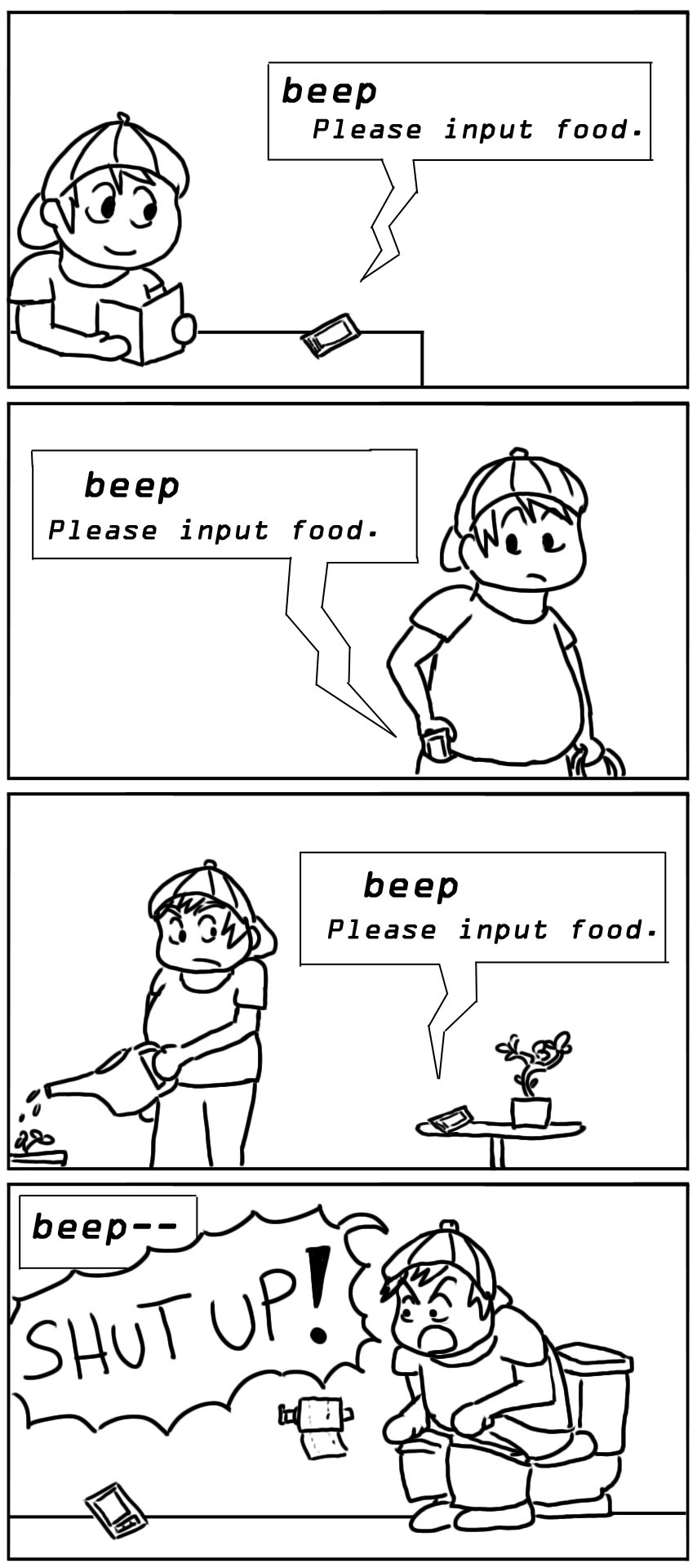
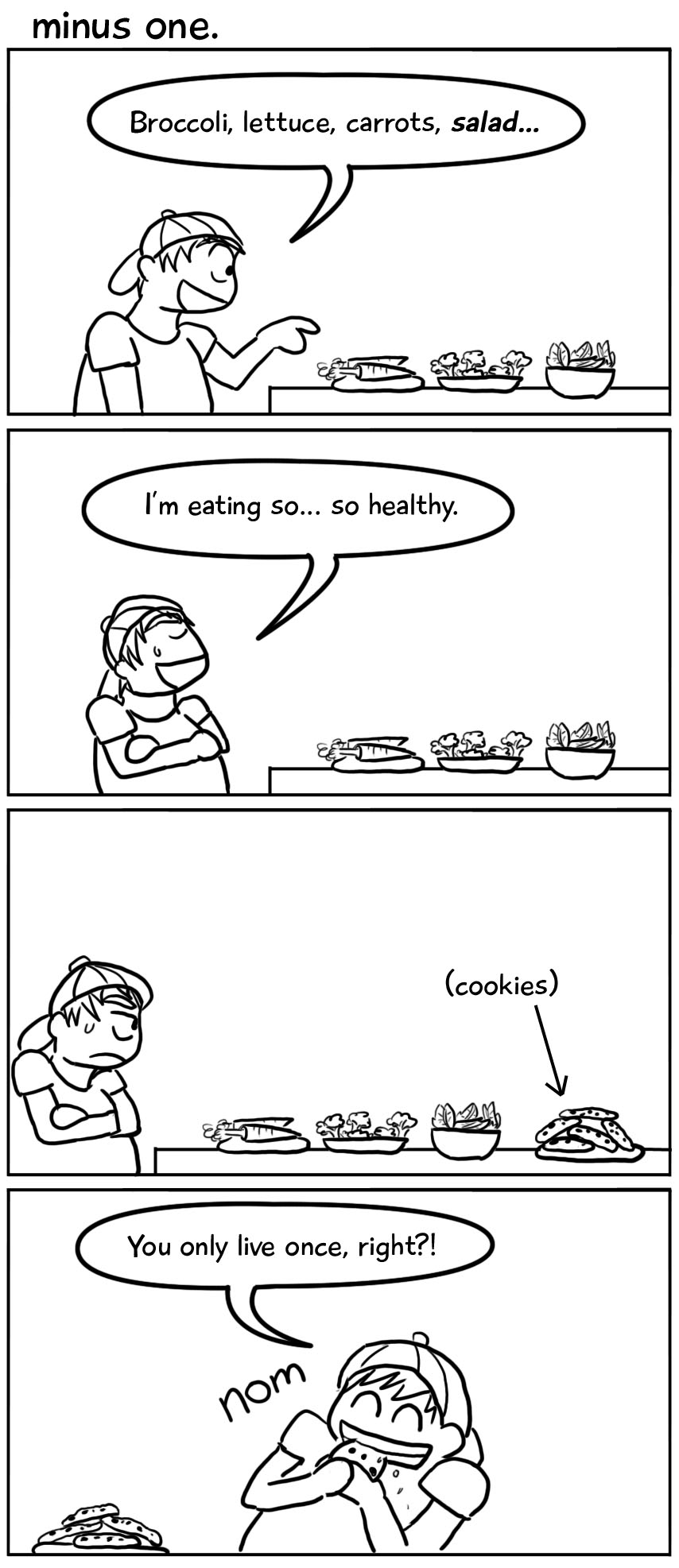
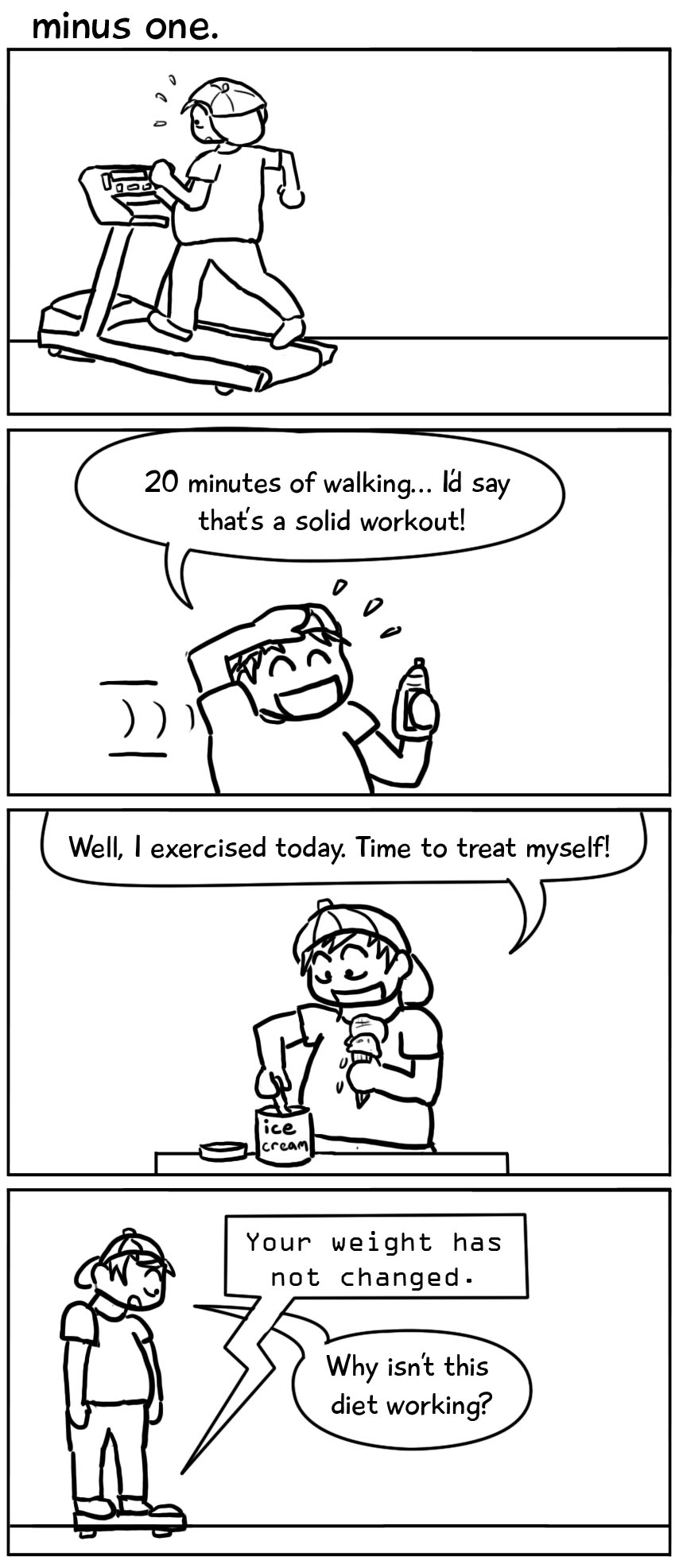
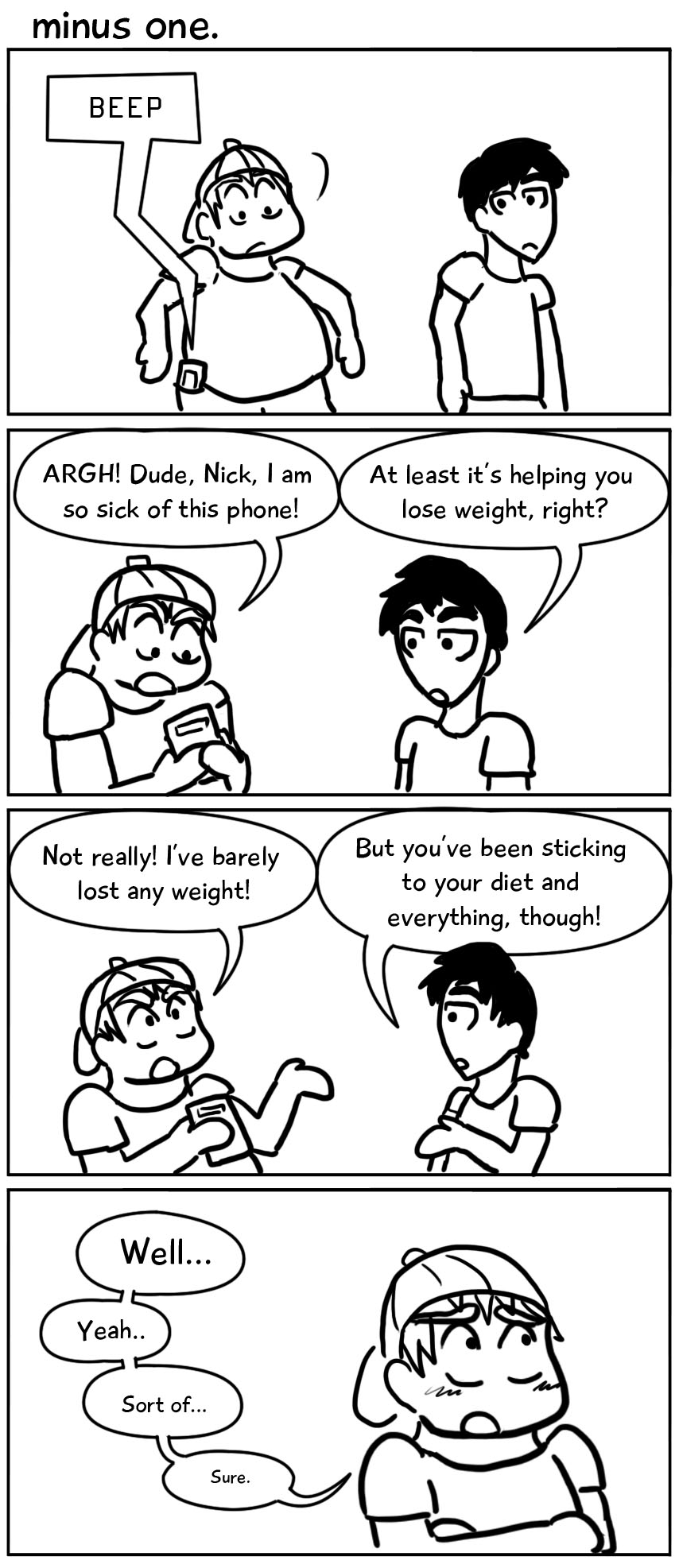
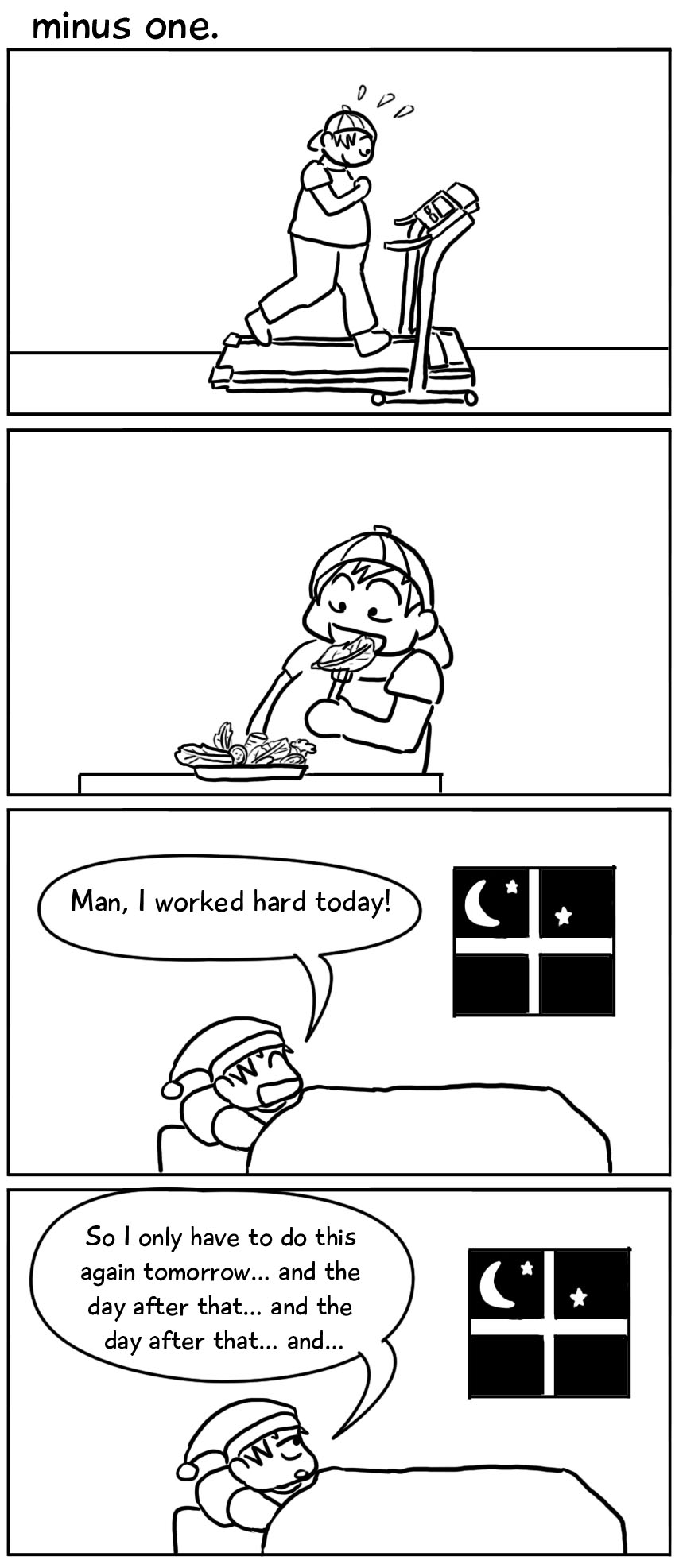
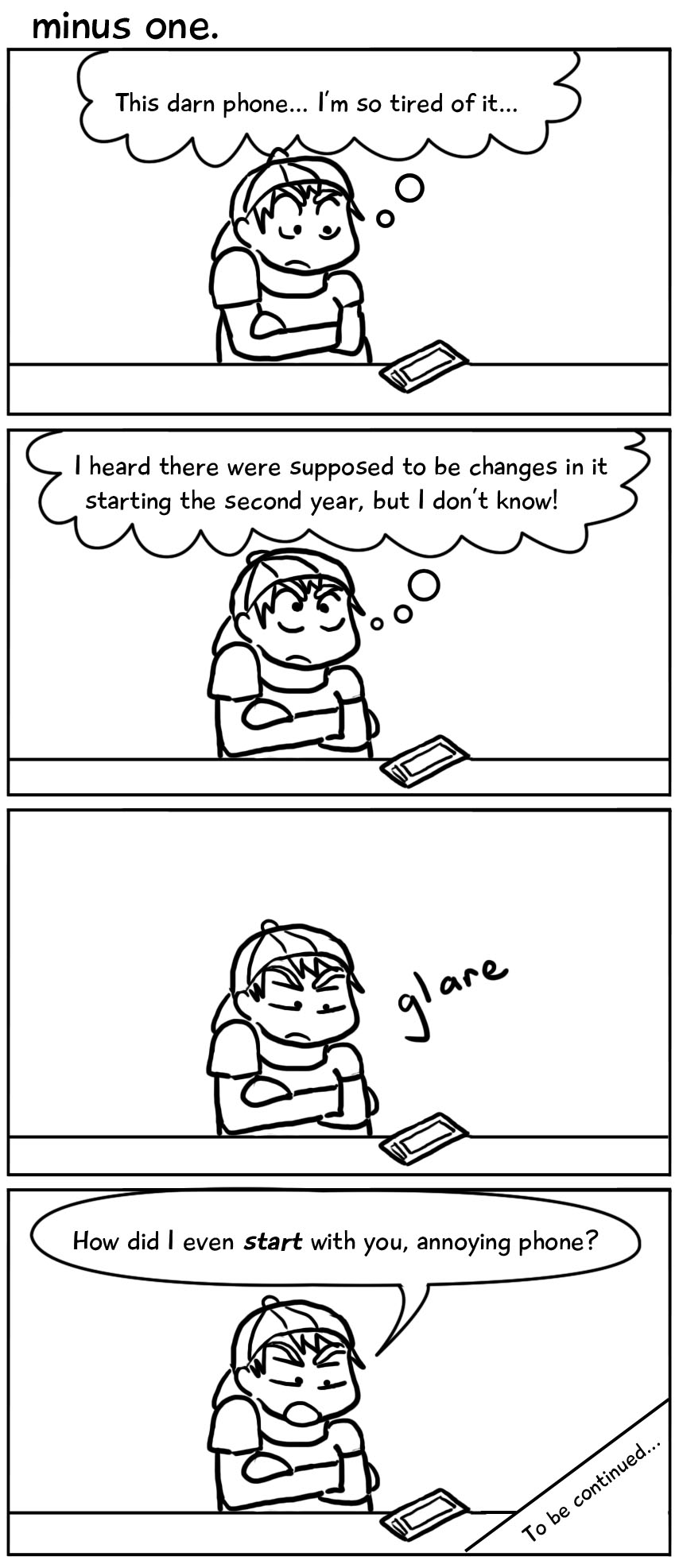
Changes to the phone– such as the addition of this comic.

I MET ART SPIEGELMAN!!!
Art Spiegelman, for those who don’t know, is a Pulitzer-Prize winning cartoonist best known for his comic book memoir, Maus. The two-volume graphic novel details the life of Art’s father, a survivor of Auschwitz, and the complicated relationship between Art and his father as a result of the Holocaust. Art Spiegelman is also known for being a pioneer in underground comix, pushing experimental comics to their limit. And finally, he is a huge proponent for “comics-as-art,” advocating that comics are more than just pulp superheroes for kids– rather, spun the right way, comics can have reach all audiences and have a huge emotional impact.

A bit of Maus' first pages.
All of these things I admire, and Spiegelman has proved a huge inspiration for me quite directly. In ninth grade, my school required us to submit an entry to the Mordechai Anielewicz Creative Arts Competition— a regional contest where kids submit art pieces about the Holocaust. I went completely off my nut, and, over a period of two months, wrote a whole graphic novel spanning a little over 100 pages. Yeah. It sounds unreal even now. Better yet, I drew the entire thing with Sharpies, so by the end I looked a little like this:

The weekend before it was due I actually pumped out 40 pages in two days. It was a surreal experience.
This comic will never see the light of day, because I wrote it five years ago and therefore it’s total and utter crap. Terrible art, choppy pacing, underdeveloped story– it’s a bit embarrassing. But it was definitely an achievement for little ninth grade me, and it was completely inspired by Art Spiegelman’s work.
So when I saw a poster announcing that Art Spiegelman was giving a guest lecture at NU, I was more than a little excited.

After confirming that this was actually happening, I proceeded to freak out to all my friends:

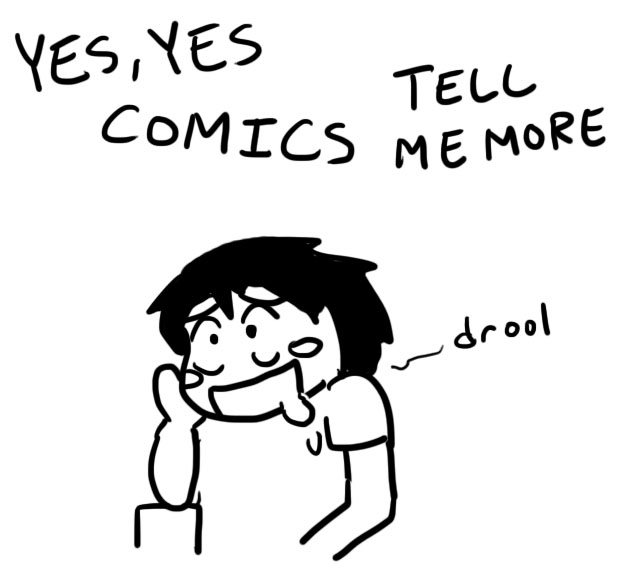
The lecture was titled “What the %@&*! Happened to Comics?” and basically featured Spiegelman walking us through the history of comics in North America. He also elaborated on how he got into the comics industry, how he ended up writing Maus, infusing the whole thing with both wit and depth. And I, the whole time, as a comic nerd, was grinning like a fool:
He even put to words what I’ve been trying to figure out for quite a while now. People have often asked me why I like comics so much, and honestly, I’ve never had an answer. Which is a problem when you’re at a college interview, and the intimidating successful woman doctor asks you, condescendingly, why comics are your “thing.”
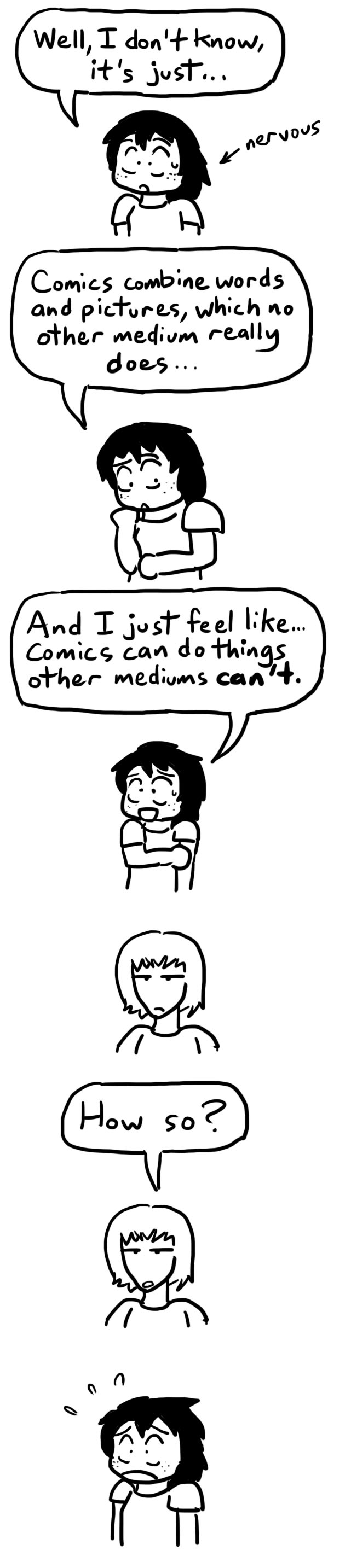
This is actually exactly what happened at my interview for Harvard. And, in fact, we were discussing Maus.
And then Art Spiegelman comes along and argues that are just as effective– sometimes more effective– as other forms of expression. According to Spiegelman, this is because “comics echo the way the brain works. People think in iconographic images, not in holograms, and people think in bursts of language, not in paragraphs.” I couldn’t have said it better myself.
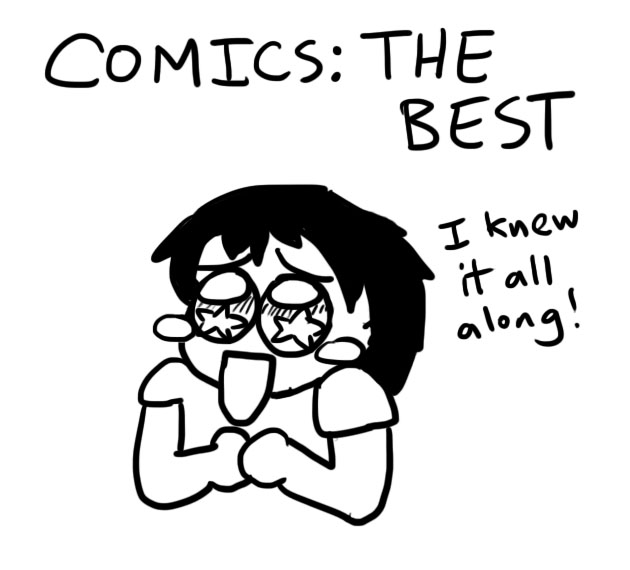
So yeah. The lecture was amazing. But the best was the reception. The crowd wandered out of the auditorium, helped themselves to drinks, and waited for the chance to meet Art himself.

Coffee was not a good idea. By the time Art Spiegelman came out, I was positively jumpy:

BUT I GOT TO MEET HIM! AND SHAKE HIS HAND! Mr. Spiegelman was really, really nice and willing to listen to everyone, even jittery ol’ me.
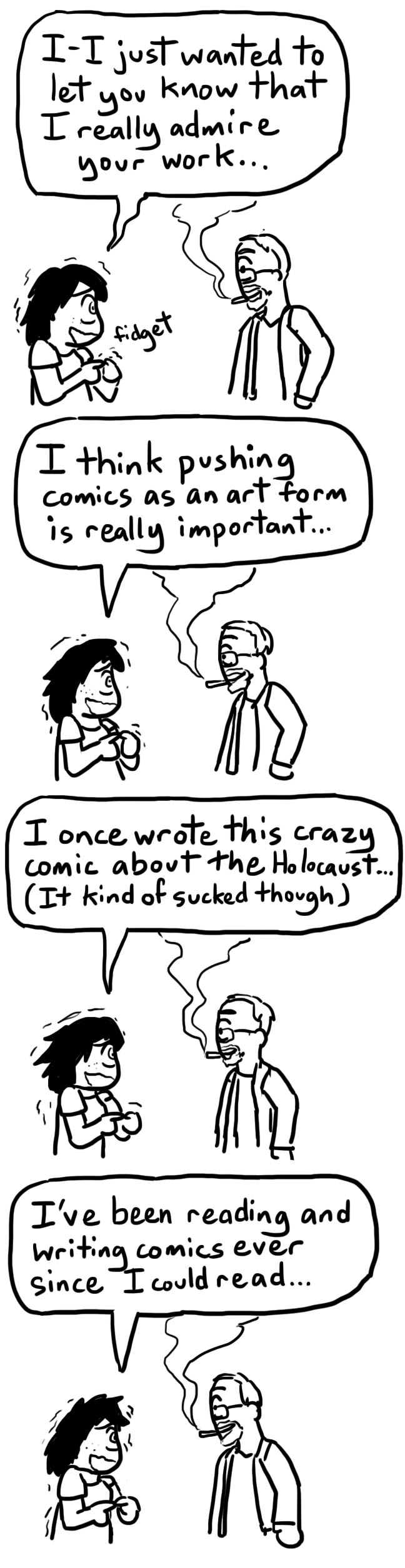
But he was very patient, and politely asked me what comic artists I liked:

IT WAS PRETTY AWESOME. I never thought I’d get to meet one of my cartooning idols. I couldn’t stop grinning for the next hour.
Probably the most memorable moment, though, was when he was talking to a girl who was in line in front of me. She asked the question I actually wanted to say:
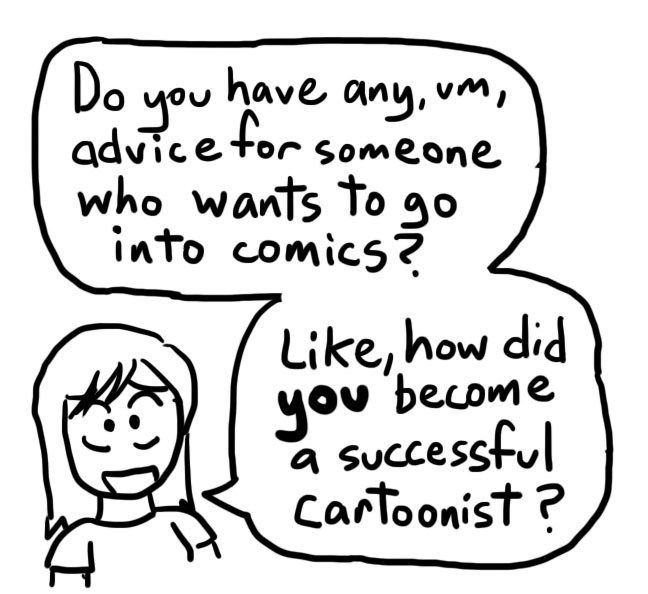
He reacted with surprise.
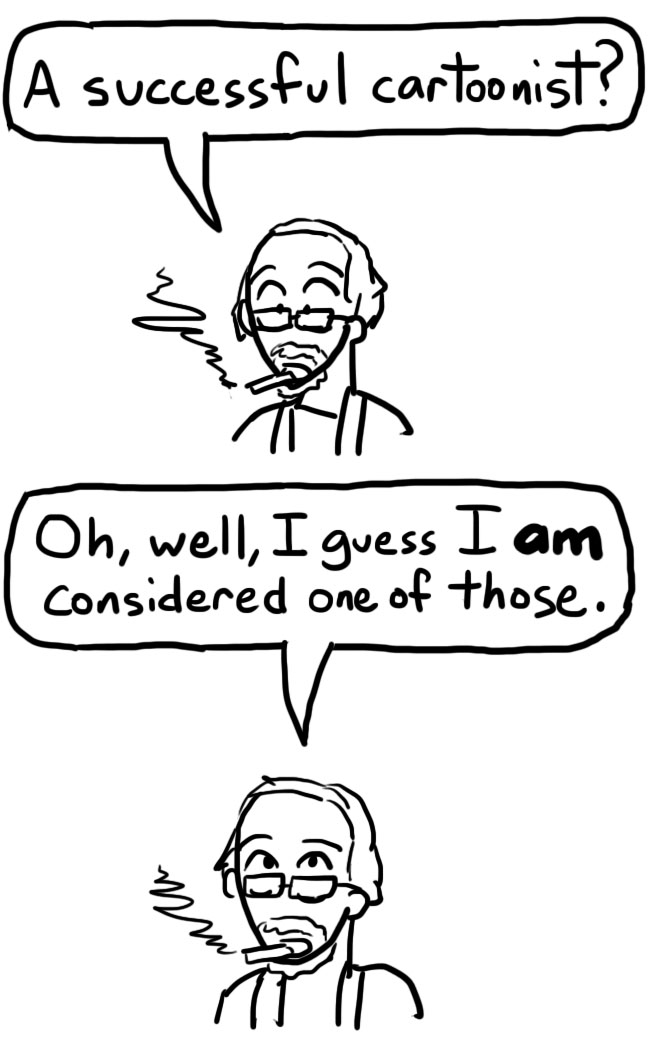
And he said it with a straight face.
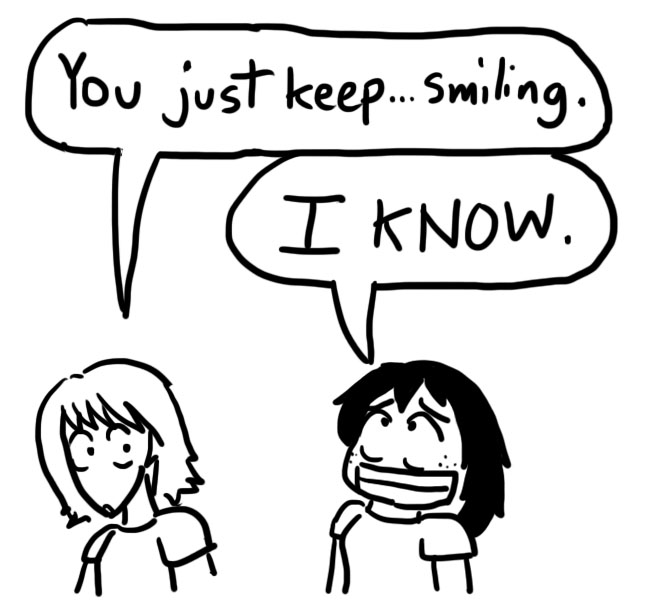
And then what he said surprised me:

I was shocked. I’ve always seen cartooning as a goal, something to strive for. A dream. But for him, a cartoonist of such huge prestige and success, it was not?
But at the same time, I realized, his words reflected my own feelings. I don’t know why I like to read comics. I especially don’t know why I like to draw comics, as it is a time-consuming and often agonizing experience. But it’s something I’ve always done, since age 7. It’s something I’ve just… had to do. That’s why I taught myself how to draw. That’s why, contrary to my parents’ hopeful predictions, I still haven’t “outgrown” comics. That’s why this blog exists. I may get my BS in biology. I can go on and get my graduate degree. A PhD, even. I could work for a company. Or maybe run my own research. Or completely change my major to International Business and work in Yugoslavia, or maybe become an accountant destined for a cubicle. Who knows? The future is totally up in the air. Except for one thing: comics. In no future of mine, in no projections or plans or daydreams or bucket lists, do I ever see myself not drawing comics.
Because comics are a passion that will stay with me the rest of my life. I know that I will never stop drawing.
And the rest will fall into place.
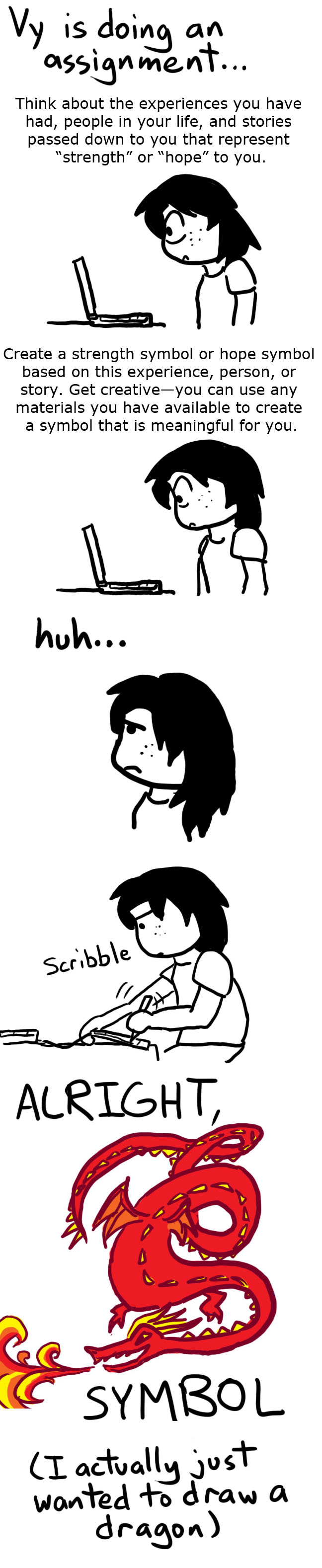 Just a quick post. I actually have this problem a lot. Those “creative” English assignments? Yeah, I always handed in these absurd, over-the top comics. My freshman year, for a project, I went crazy and drew this 117-page graphic novel. (A couple I drew for my senior year on Hamlet and Robert Frost are on my never-updated deviantart, if you’re into poorly-drawn comics.)
I’ve been asked a couple of times about my second job, the one where I draw cartoons.
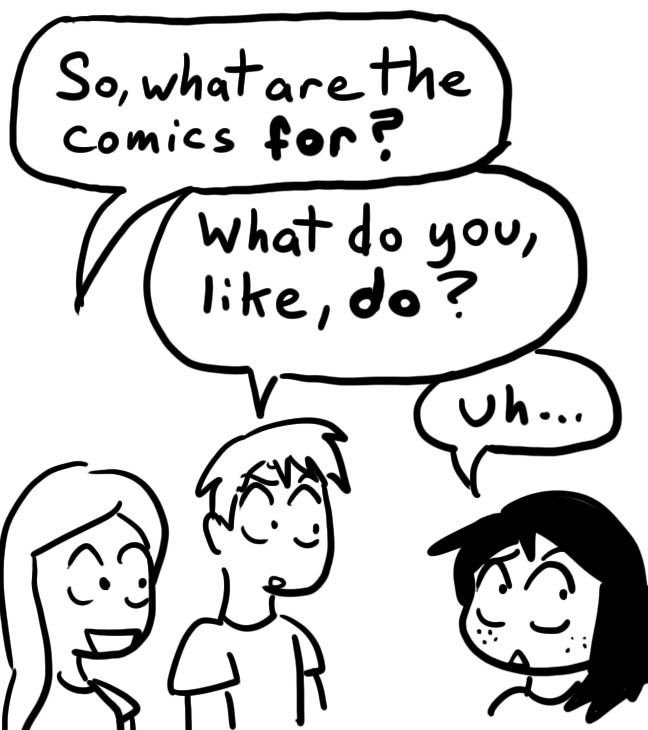
So, let me explain this in greater detail.
I work for the Northeastern College of Computer and Information Science. There’s a professor there (more accurately, he’s a PhD, so I refer to him as “doctor”) who is running a joint study with Duke University. They research the interactions between people and technology.
Their goal is to develop a mobile phone application that will help people lose weight. They’ve developed the app. Now, they’re running a two-year study where overweight people use this app to test its effectiveness. In the app, participants input the food they eat and the exercise they do into their phones every day. To make sure that people don’t forget, the phone will prompt them a couple times a day to record their dietary activities.
Food diaries like this are extremely effective in helping people lose weight. (I’ve tried it, and I can attest!) However, they are extremely tedious to upkeep day after day after day. My boss, one of the leaders of the study, would like to make the phone app more exciting. He wants it to be edgier, more fun, more interactive. He wants people to have an incentive to use their phone.
And what’s a better incentive than poorly drawn comics?
I was called in and offered this job. Since there’s a year left in the study, I’ll be drawing a year’s worth of comics. And since the participants use their phones every day, this is not a once-a-week strip– it’s a full-blown, daily, 365-comic strip project that I have to create. Hopefully, the participants will like the comic enough to actually check their phones when it beeps.
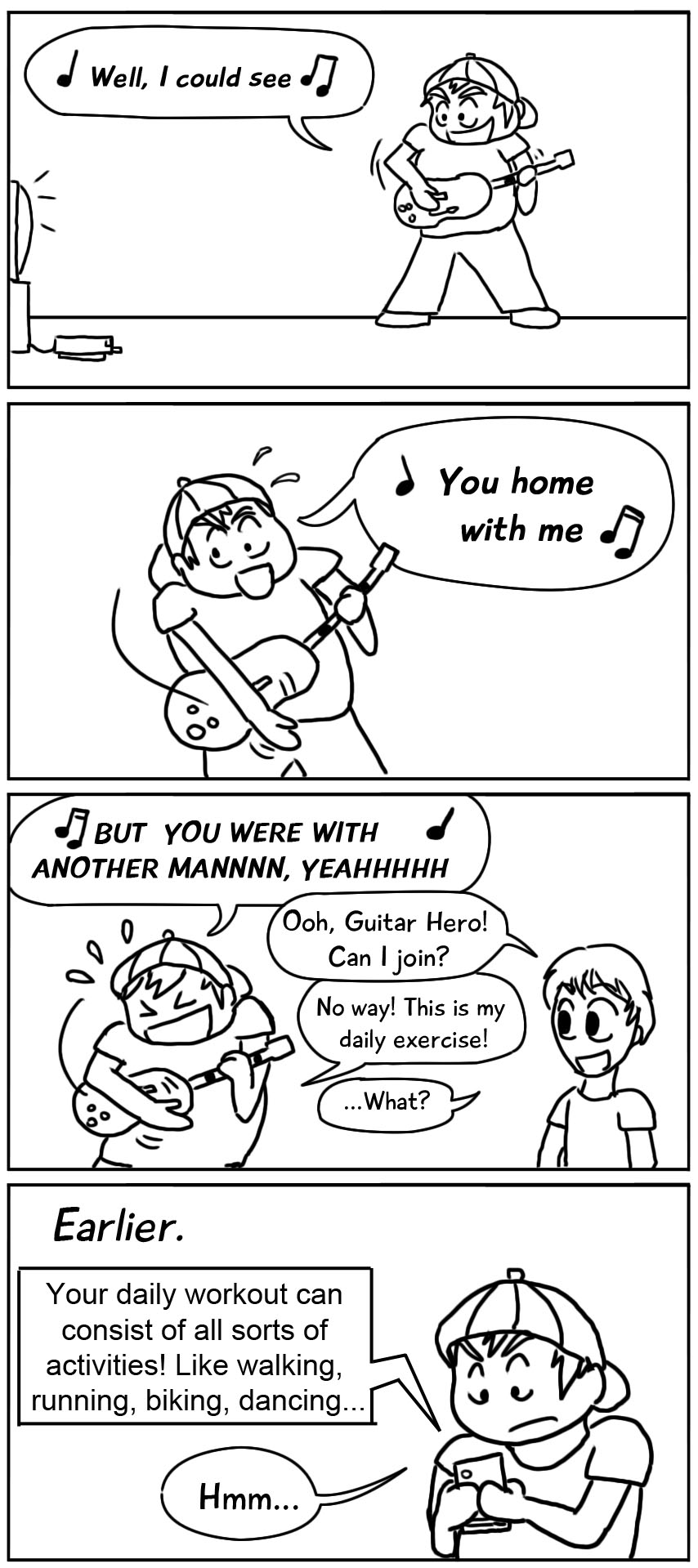
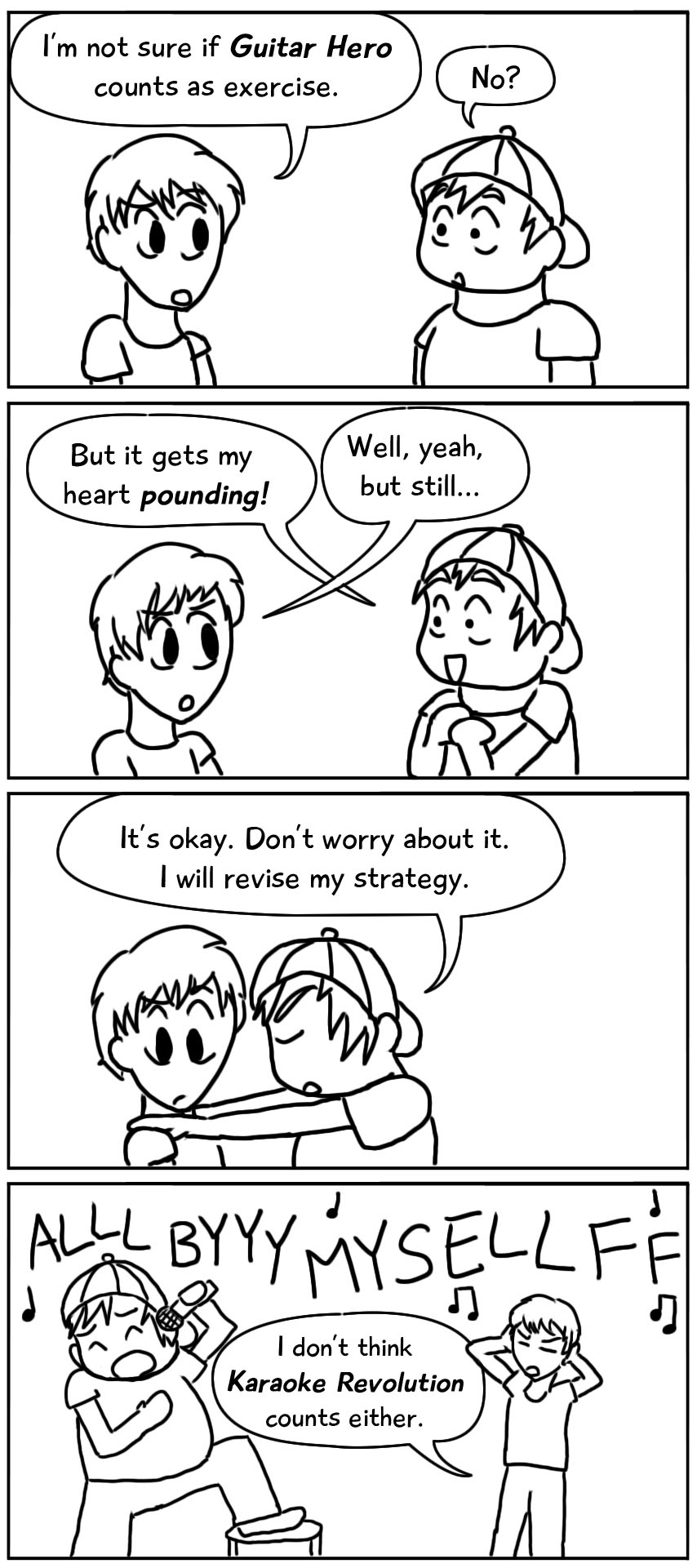
The other side of this project is that the comic has to be informative. It has to disguise diet and exercise tips in a palatable form. It’s supposed to highlight some of the challenges of a long-term lifestyle change, and how to deal with it. The best way to do this, my boss and I agreed, was for me to write a comic about a character actually in the study using the the actual app.
It’s a bit of an undertaking. But I can do it.
Admittedly, I don’t have much free time to work on it. At this point, I’ve outlined the entire storyline and have about a third of the comics scripted, but not drawn. For the sake of showing what I “have to do,” though, I have here seven “pilot” comics I created at the start of the project. (They had to be sent to Duke to get this whole “comic” idea approved, which, thankfully, it was.)
Enjoy! Apologies for the text-heavy post.
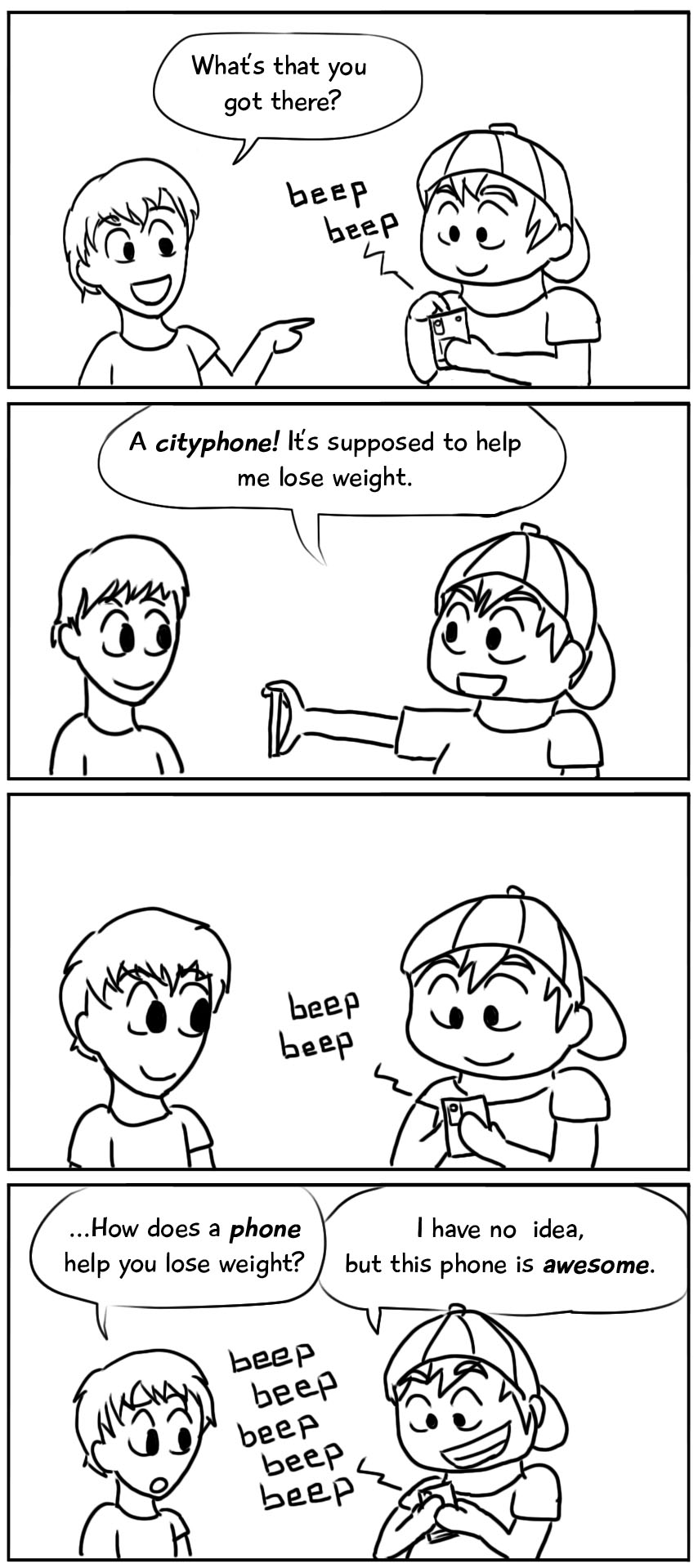 (The participants use Droids for the study.)
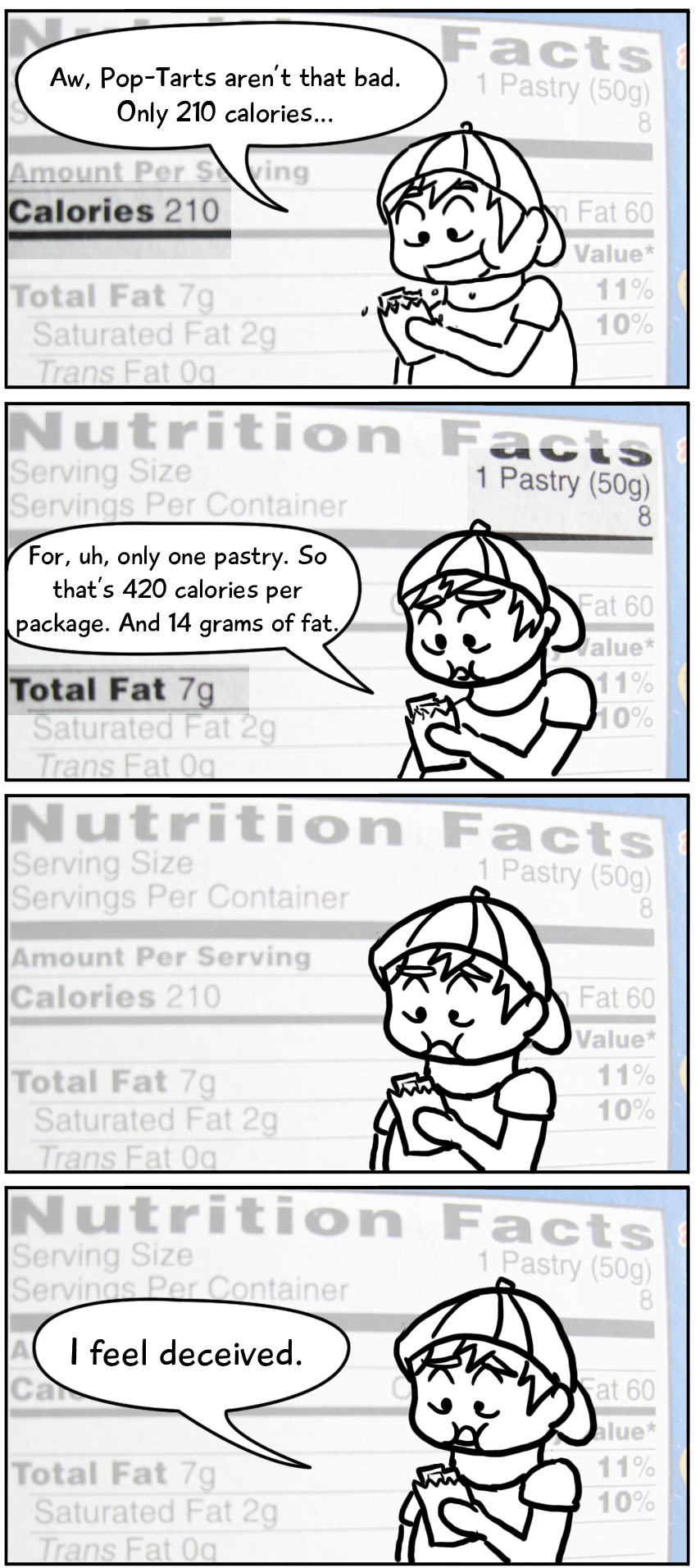
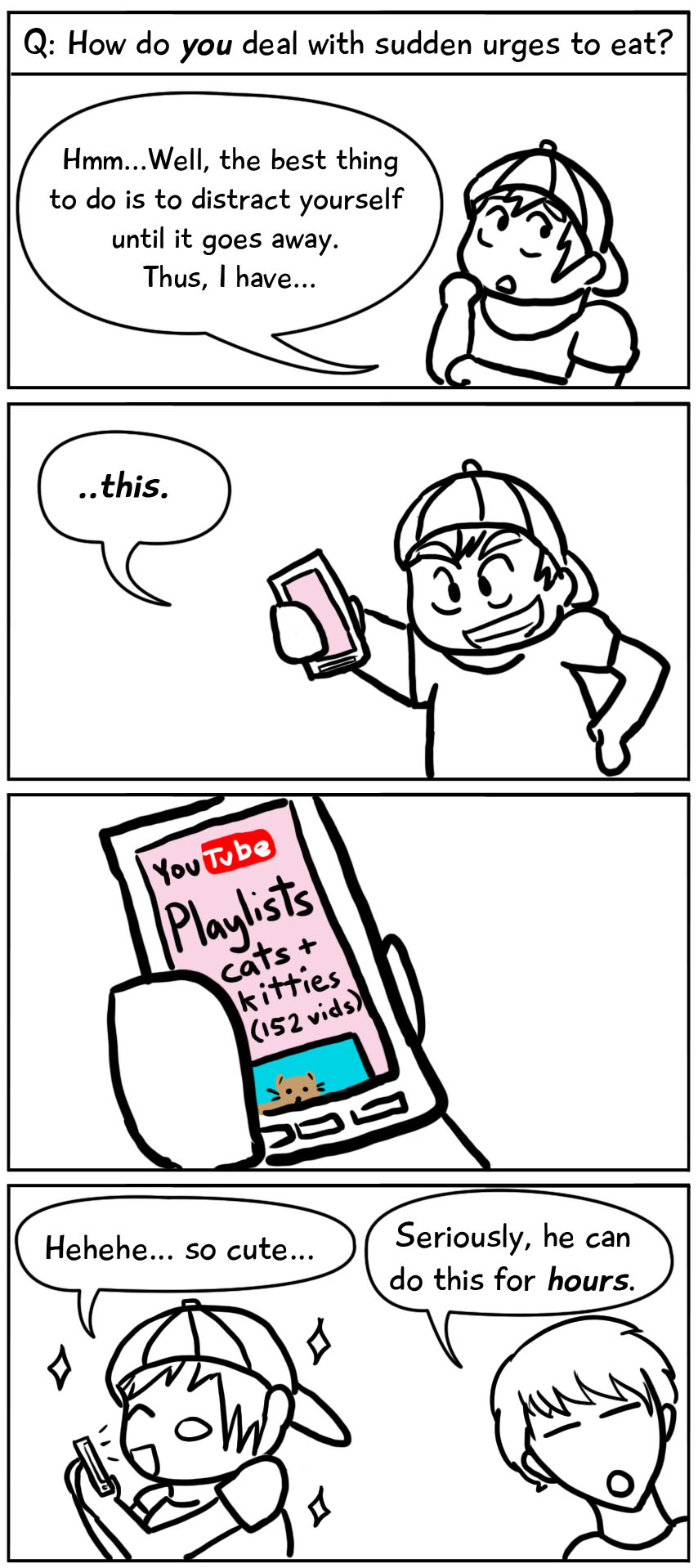
And that’s what my job looks like! Until next time!

